
Composite or timber decking? A comparison to clear up your doubts
Wooden or composite decking? Compare wooden and composite decking boards — prices, durability, care and appearance
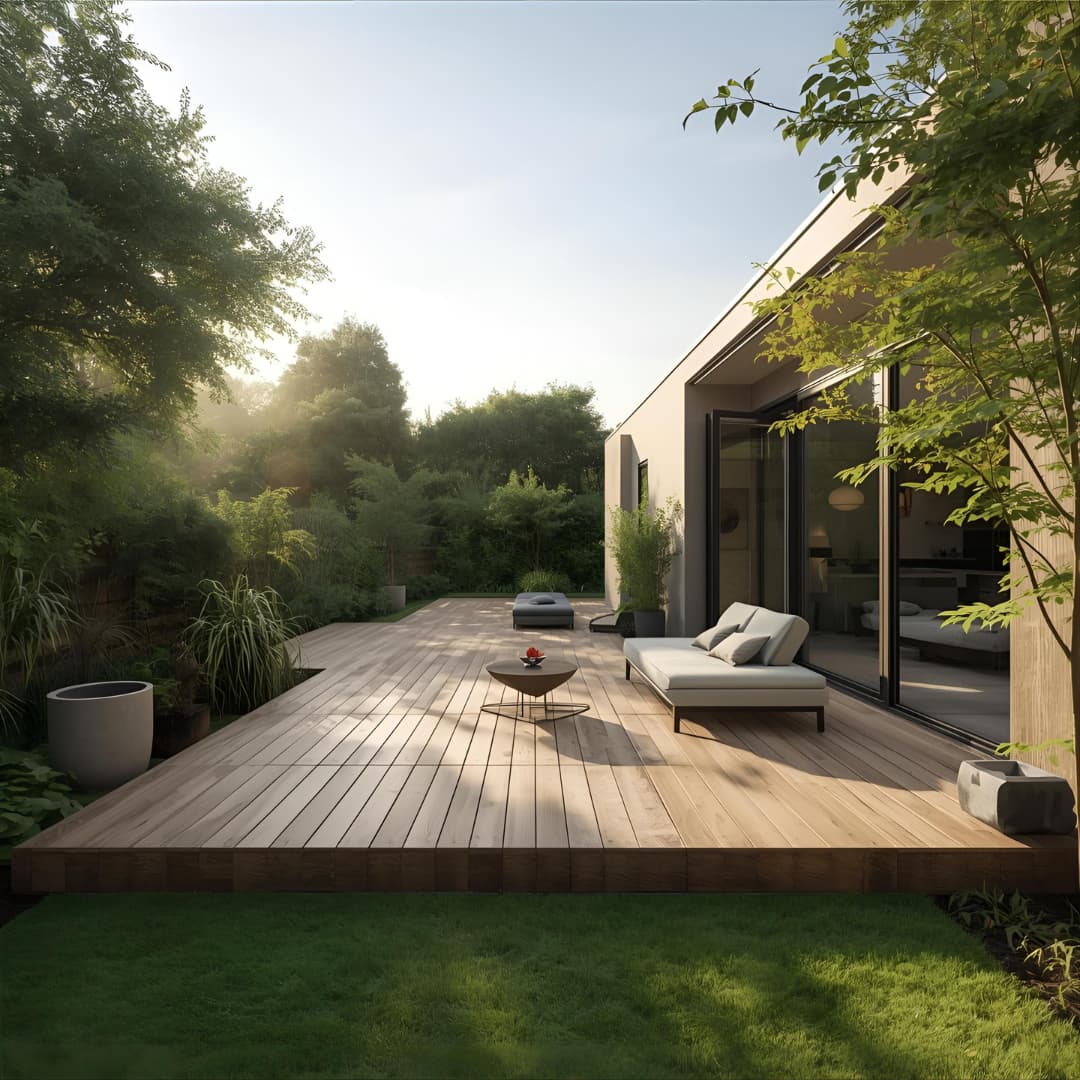
Building a deck is one of the most important investments around the home. It is a place to meet with family and friends, a space to relax and a showcase for your property. Choosing the right material for your deck is hugely important for both its appearance and the durability of the structure. Most people choosing a deck find themselves deciding between a wooden deck and a composite deck. Both options have their advantages and disadvantages, and the key is to choose one that suits your lifestyle, budget and expectations.
In this guide, we’ll compare:
-
durability, maintenance and costs,
-
appearance and comfort,
-
practical tips to help you make the best decision.
1. Wooden decking board – natural beauty and timeless style
A wooden deck is a traditional, timeless choice. Nothing can replace the warmth of natural wood, which brings a unique atmosphere to your garden.
The most commonly used types of wood for decking:
-
Pine and spruce – inexpensive and readily available, but they need frequent treatment.
-
Siberian larch – a popular choice thanks to its greater resistance to moisture and greater durability.
-
Bangkirai, Ipe, Massaranduba – exotic hardwood decking boards with very high resistance to the weather.
-
Thermally modified wood – wood treated with heat, resistant to moisture and fungi.
Advantages of a wooden deck:
-
Natural appearance – wood looks beautiful in a garden.
-
Warm surface – pleasant to the touch and ideal for walking barefoot.
-
Can be refurbished – wood can be sanded and oiled again.
Disadvantages of a wooden deck:
-
requires regular treatment and oiling,
-
may crack and warp when exposed to moisture,
-
susceptible to fungi and insects,
-
the surface may be slippery after rain.
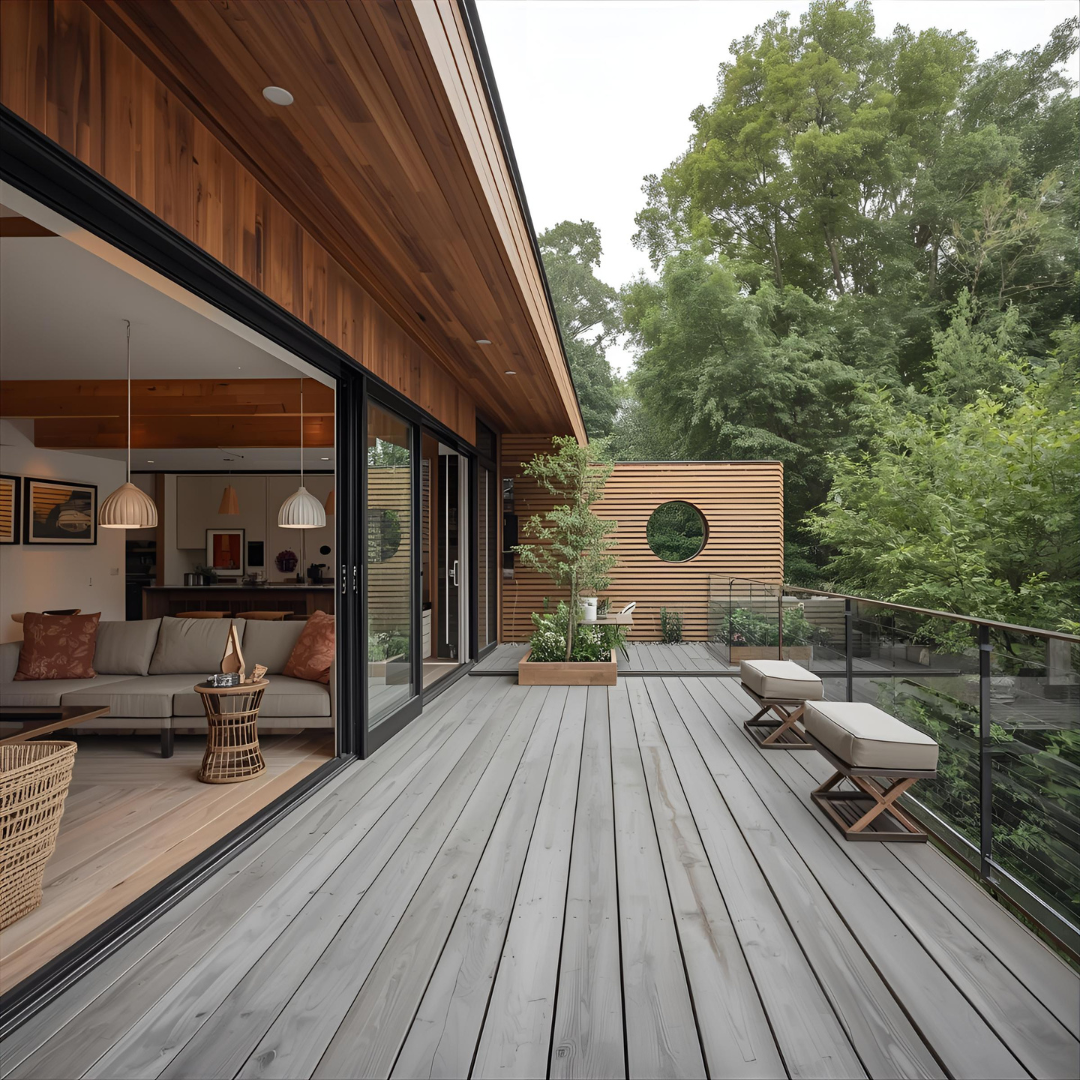
2. Composite decking board – modern style and convenience
A composite deck is an increasingly popular option. A composite decking board is made from a mixture of wood flour and polymers, resulting in a durable material that is resistant to moisture and safe to use.
Advantages of a composite deck:
-
No maintenance – no painting, oiling or treatment required.
-
Durability – resistant to moisture, fungi, mould and insects.
-
Dimensional stability – composite decking boards do not warp or crack.
-
Safety – non-slip surface, pleasant to the touch.
-
Variety of colours and finishes – wood-effect, shades of grey, brown and anthracite.
Disadvantages of a composite deck:
-
higher purchase price than pine or spruce,
-
gets hotter than wood in full sun,
-
less ‘natural’-looking than exotic hardwood.
3. Wooden deck vs composite deck – a direct comparison
| Feature | Wooden deck | Composite deck |
|---|---|---|
| Appearance | Natural, unique appearance | Modern, wood-effect appearance |
| Durability | 10–15 years (exotic hardwoods up to 25 years) | 20–30 years |
| Maintenance | Requires treatment every 1–2 years | No maintenance required |
| Price | Pine from 80 zł/m², exotic hardwoods from 200 zł/m² | From 150–300 zł/m² |
| User comfort | Warm to the touch, but may have splinters | Smooth, non-slip |
| Installation | Timber or metal subframe | Clip-fixing system |
4. Decking costs – which option offers better value?
-
Deck made from pine or spruce timber – the cheapest option, costing approx. 80–120 zł/m² for materials + 100–150 zł/m² for installation.
-
Deck made from exotic hardwood – from 200 up to 400 zł/m² for materials + 150–250 zł/m² for installation.
-
Composite deck – from 150–300 zł/m² for materials + 120–200 zł/m² for installation.
💡 Although a composite decking board costs more initially, it offers better value in the long run – with no maintenance costs and a longer lifespan.
5. Which option should you choose?
When to choose a wooden deck?
-
if you value natural appearance and atmosphere,
-
if you enjoy caring for wood and don't mind regular maintenance,
-
if you're planning a budget-friendly project (e.g. pine or spruce).
When is a composite deck the better choice?
-
if you're looking for a maintenance-free solution,
-
if you want a deck that will last for years without needing renovation,
-
if you prefer a modern design and a consistent look.
6. Installation – what you need to know
Installing a wooden deck:
-
requires a sturdy subframe, preferably made from pressure-treated timber or metal,
-
the boards are fixed with stainless steel screws,
-
leave gaps between the boards to allow for expansion.
Installing a composite deck:
-
is based on a system of fixing clips,
-
the finished result is elegant, with no visible screws.
7. Care and use
-
A wooden deck – clean it regularly, treat and oil it; sand and renovate it if needed.
-
A composite deck – simply wash it with water and a mild detergent; no treatment is needed.
8. Common mistakes when choosing and installing a deck
❌ Choosing the cheapest untreated timber.
❌ Failing to leave expansion gaps – the boards may warp.
❌ Installing composite decking boards on a timber subframe – this shortens their lifespan.
❌ Incorrect gradients – water collects on the deck surface.
❌ Failing to care for the timber regularly – the deck quickly loses its good looks.
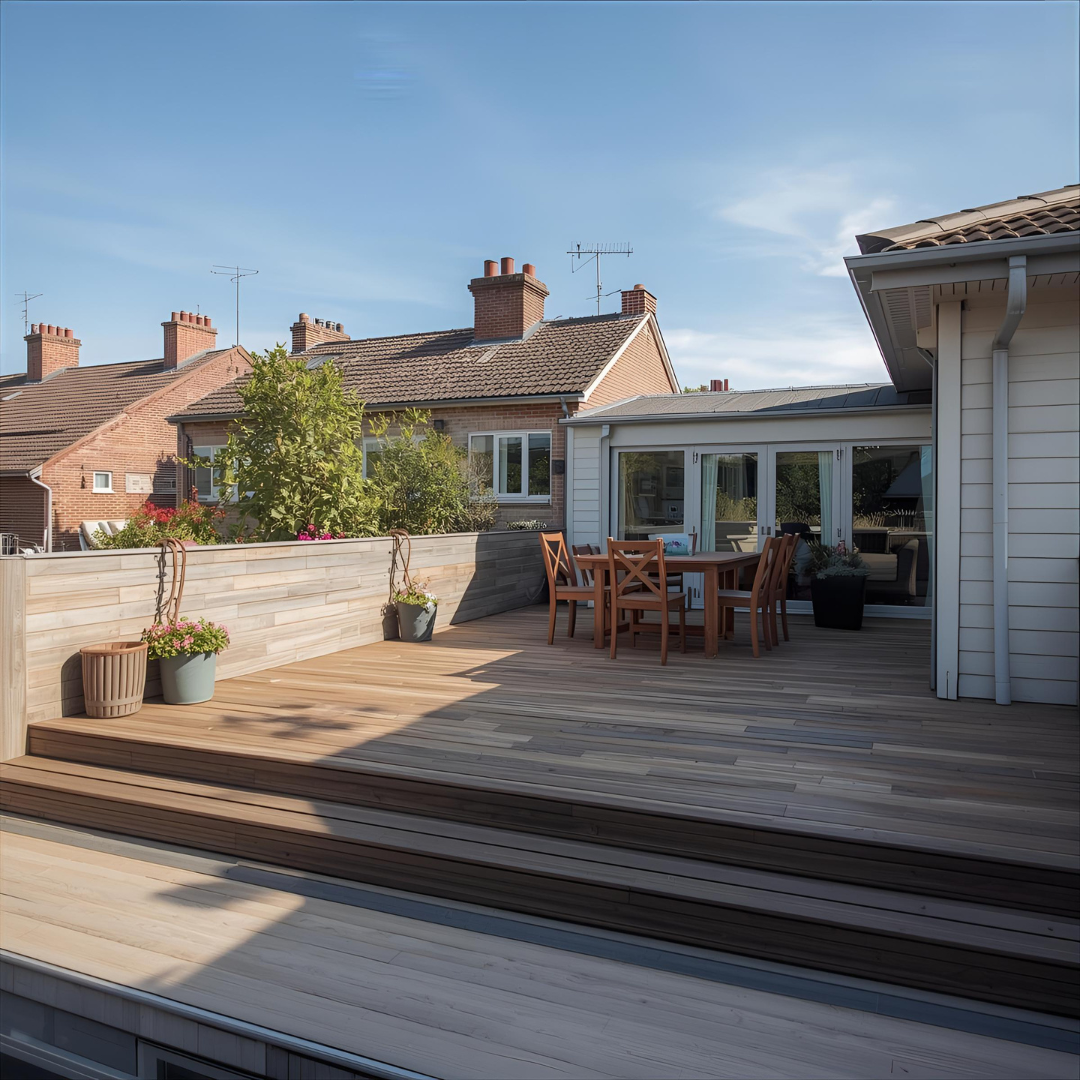
9. Summary – wooden deck or composite deck?
The decision between a wooden decking board and a composite decking board depends on your priorities.
-
A wooden deck – ideal for nature and tradition lovers who are prepared to spend time on maintenance.
-
A composite deck – a practical choice for those who value convenience, durability and freedom from ongoing maintenance.
👉 If you dream of a deck that will last for decades without extra costs, choose composite decking boards.
👉 If you want to enjoy the scent of wood and its natural texture, choose wooden decking boards.
Both options have their place in modern architecture, and either can become a beautiful feature in your garden – the important thing is to choose one that suits your needs.



