
Terrace Supports – Why Choose Them for a Joist Structure?
Wondering whether it’s worth using decking supports beneath a joist structure? Discover the advantages, disadvantages and key information to help you make a decision.
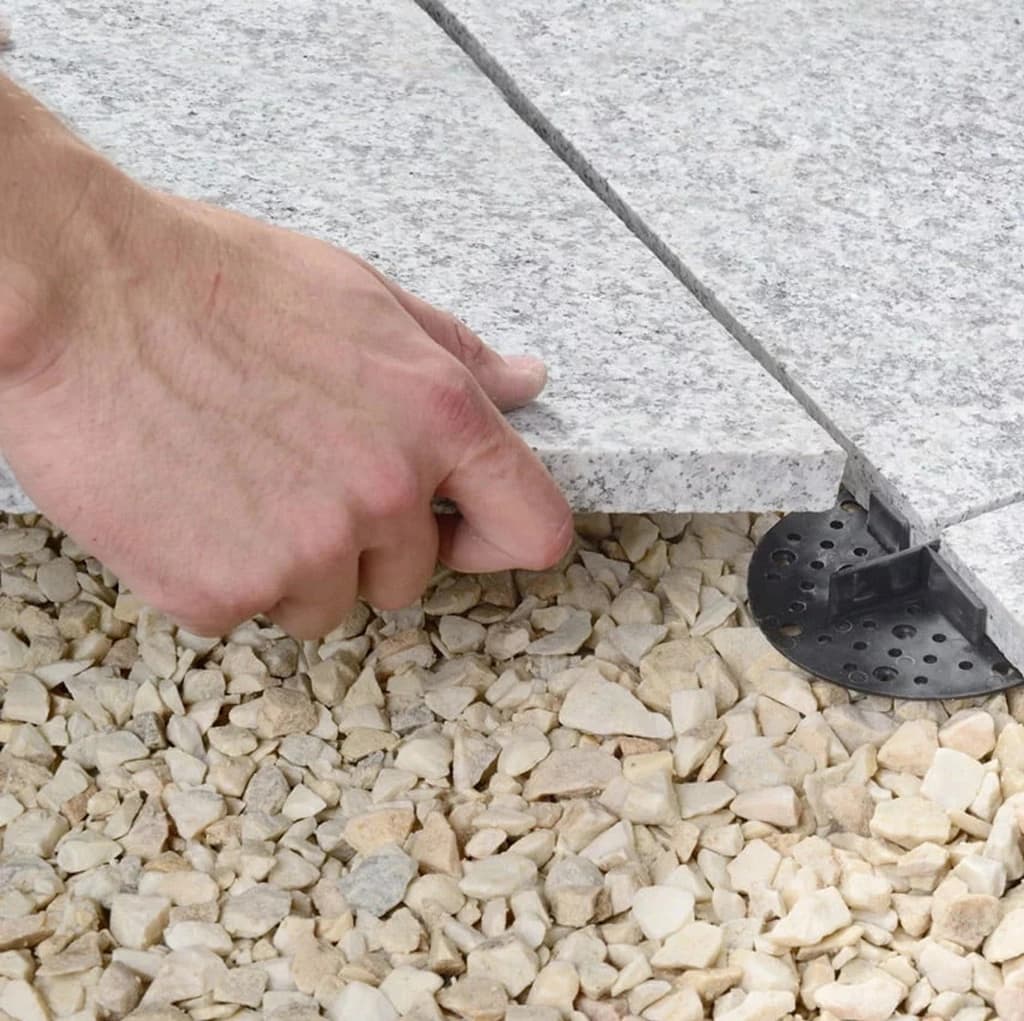
Building a terrace is a dream for many people. Whether you are planning it as a place to relax, a space to meet with family and friends, or an attractive addition to your garden, the decisions made at the design stage are crucial to the durability and functionality of the entire structure. One important aspect to consider is the choice of the right support system. In this context, terrace supports are becoming increasingly popular. But are they worth choosing for a joist structure? Let’s find out!
What are terrace supports?
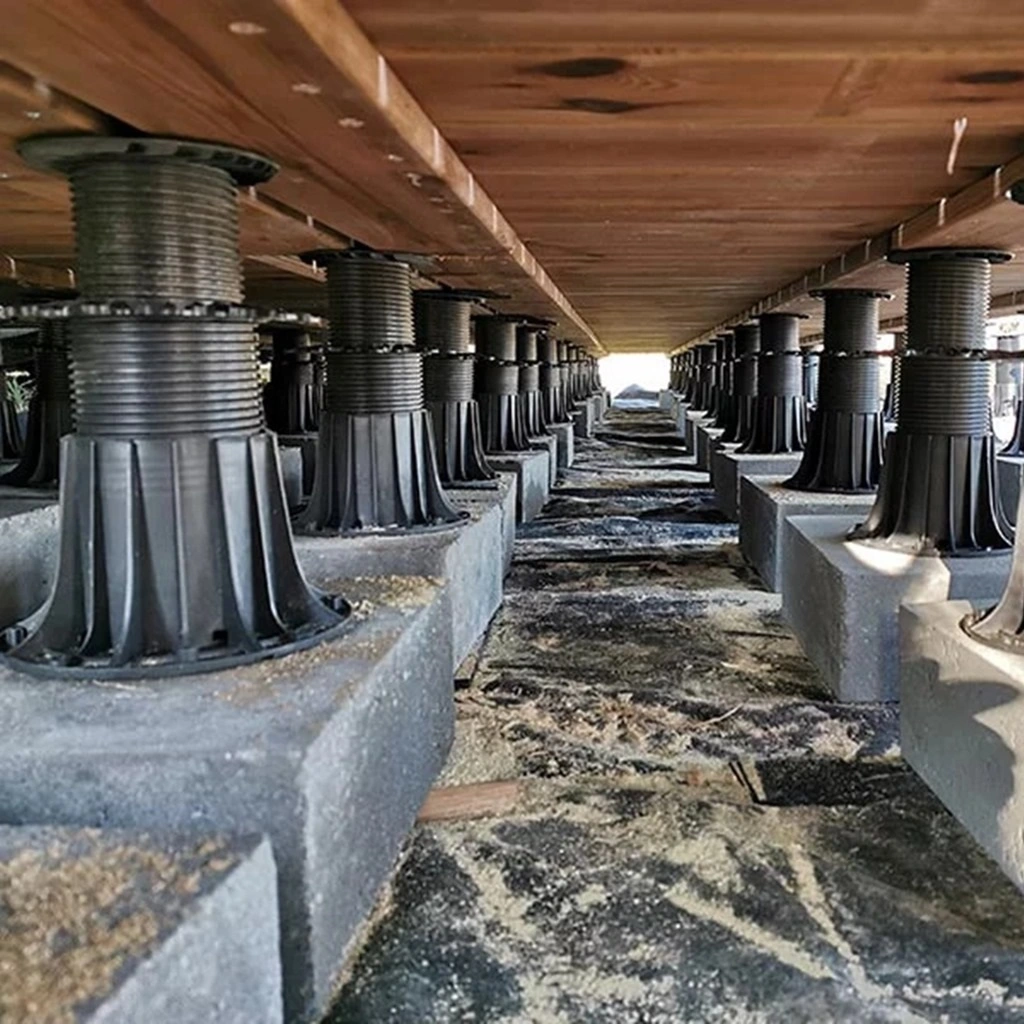
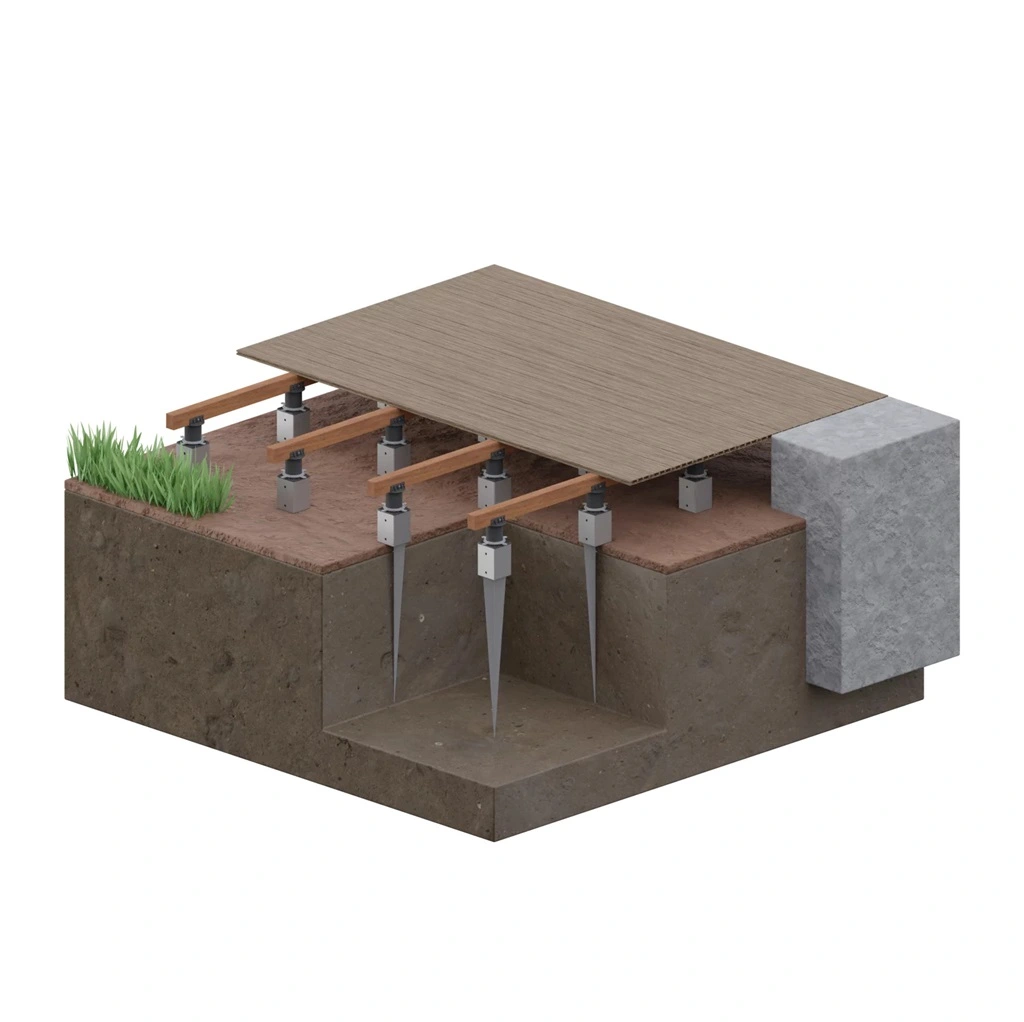
Terrace supports, also known as terrace pads or pedestals, are special structural components used to support terrace joists. They allow the terrace structure to be raised to a certain height above the ground, which can offer many benefits. Supports are made from various materials, such as plastics, metal or concrete, which affects their strength and resistance to weather conditions. Their main function is to ensure stability and distribute the load evenly across the entire terrace surface. This makes the terrace more durable and resistant to deformation. In addition, supports allow the height of the structure to be adjusted, which is particularly useful on uneven ground.
Advantages of using terrace supports.
1. Easy height adjustment
One of the greatest advantages of terrace supports is the ability to adjust the height of the structure precisely. This makes it easy to match the terrace level to uneven ground or other surrounding features, such as steps or kerbs. This makes supports an ideal solution when building terraces on challenging terrain.
2. Resistance to weather conditions.
Terrace supports, especially those made from plastics or metal, are characterised by high resistance to changing weather conditions. They are unaffected by moisture, making them less susceptible to corrosion or damage caused by prolonged contact with water. In addition, terrace supports are resistant to UV radiation, which protects them from discolouration and material degradation.
3. Better ventilation and water drainage.
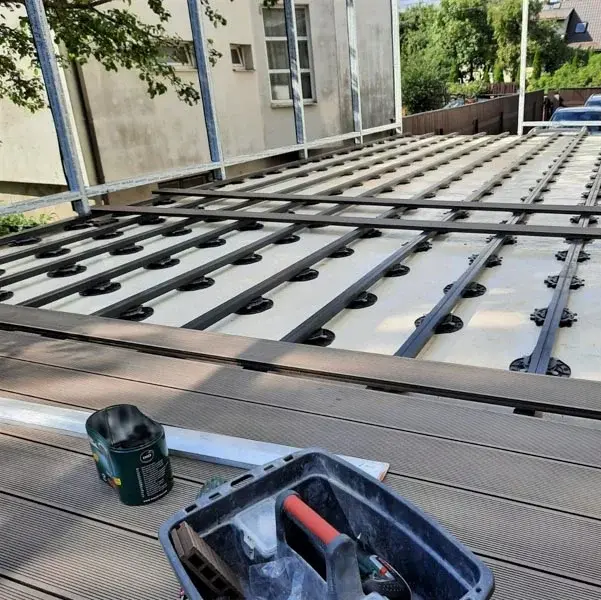
Raising the terrace on supports allows air to circulate freely beneath the structure, helping to improve ventilation and remove moisture. This reduces the risk of mould forming and wooden structural components rotting. In addition, terrace supports make it easier to drain rainwater, preventing it from collecting beneath the terrace and adversely affecting the ground.
4. Easy installation and removal.
Installing terrace supports is relatively straightforward and quick, saving time and costs associated with building a terrace. The supports can be installed easily by yourself, without the need to use specialist services. If the terrace needs to be dismantled, for example for repairs or to move it elsewhere, the supports can be removed and reused without difficulty.
5. Appearance and functionality.
Raising the terrace on supports creates an attractive ‘floating’ effect. In addition, the space beneath the terrace can be used in various ways, for example as storage for garden tools or as a place for technical installations such as lighting or irrigation systems.
Disadvantages of using terrace supports.
Despite their many advantages, terrace supports also have some drawbacks that are worth considering before deciding to use them.
- Cost: One of the main disadvantages of terrace supports is their cost. Compared with traditional support methods, such as concrete blocks, supports can be more expensive, especially if you choose models with high strength and advanced adjustment features. However, it is worth remembering that the cost of the supports may be offset by savings on installation work and the durability of the entire structure.
- Installation on stable ground: Although installing terrace supports is relatively straightforward, they require stable, level ground. On sites with significant differences in height or unstable ground, additional ground preparation may be necessary, which can increase the cost and time required to complete the project.
- Limited load-bearing capacity: Not all terrace supports have the same load-bearing capacity. When choosing a suitable model, you should check its technical specifications to make sure it can withstand the load resulting from use of the terrace. For larger structures or terraces that will be used intensively, supports with a higher load-bearing capacity may be necessary, which involves higher costs.
When is it worth investing in terrace supports?
Terrace supports are particularly recommended for situations where:
- The ground is uneven or unstable – Supports make it possible to level the structure, even on difficult terrain.
- You are planning to change or dismantle the terrace frequently – Their ease of installation and dismantling makes supports ideal for temporary or mobile structures.
- You want to achieve an attractive ‘floating’ terrace effect – Supports allow you to create a terrace that appears to hover above the ground, which can be visually appealing.
How to choose the right terrace supports?
Choosing the right terrace supports depends on several key factors, such as the type and size of the terrace, the type of ground it will be installed on, and the planned load on the structure. Here are some tips to help you make the right choice:
- Determine the load-bearing requirements – Make sure the supports you choose have an adequate load capacity for the planned terrace load. Consider not only the weight of the structure itself, but also additional loads such as garden furniture or potted plants.
- Choose height-adjustable supports – If the ground where you plan to build the terrace is uneven, choose supports with adjustable height. This will make it easier to level the structure and ensure its stability.
- Pay attention to the material – Terrace supports can be made from various materials, such as plastics, metal or concrete. Your choice of material should depend on the weather conditions in your area and the appearance you want to achieve.
- Check reviews and recommendations – Before buying supports, it is worth reading reviews from other users and recommendations from manufacturers. This will help you feel confident that you are choosing a tried-and-tested product that meets your expectations.
Alternatives to terrace supports.
If terrace supports are not the ideal solution for you, there are several alternatives that may meet your expectations:
- Concrete blocks – Traditional concrete blocks are a cheaper alternative to supports, but they do not offer the same flexibility in height adjustment.
- Concrete posts – For larger terrace structures, concrete posts can provide better stability and load-bearing capacity than terrace supports.
- Aggregate sub-base – This is a popular method for building terraces on the ground, involving the creation of a stable sub-base from a layer of aggregate.
Summary.
Terrace supports are a modern solution that can make building a terrace much easier and increase its durability and functionality. Although using them involves certain costs, the benefits, such as ease of installation, height adjustment and resistance to weather conditions, may outweigh the potential drawbacks. If you are planning to build a terrace on difficult terrain or value appearance and functionality, terrace supports may prove to be a worthwhile investment. Before making a final decision, however, it is worth carefully analysing your needs and the conditions on your plot to choose the solution that best meets your expectations.



