
Can screws be driven directly into a composite decking board?
Can you screw directly into a composite decking board? Find out how to fix WPC boards correctly, when to use fixing clips and how to avoid cracks and damage to your terrace.
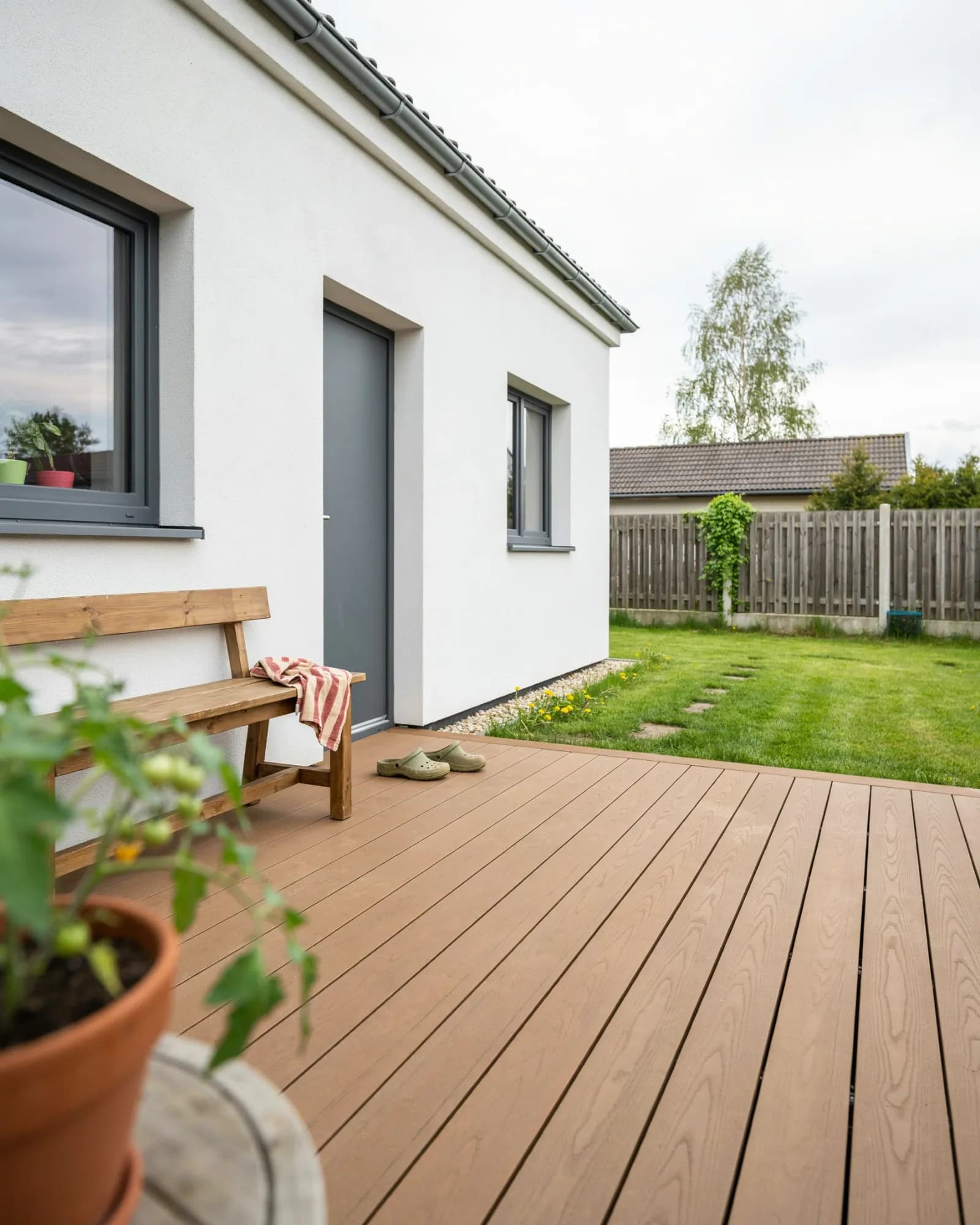
Installing a composite decking terrace may seem straightforward at first glance. We prepare the ground, lay the joists, cut the decking boards to size and fix them to the structure. It is at this last stage that a question often arises: can you screw directly into a composite decking board? The answer is not as simple as it might seem. It is often physically possible to screw into WPC material. However, this does not mean that every composite decking board should be fixed to the joists in this way. In most modern decking systems, the primary installation method uses special fixing clips placed between the decking boards. These help maintain gaps, provide a neat finish and allow the material to move in response to temperature changes. There are, however, situations where the manufacturer may specify the use of screws. The key rule is therefore: the fixing method should always follow the instructions for the specific composite decking system.
How is a composite decking board normally fixed?
Most WPC decking systems use concealed fixings. The decking boards have specially shaped side edges that accommodate dedicated clips. The clip sits between two decking boards and is fixed to the joist below. This means that no rows of screw heads are visible on the surface of the finished terrace. This solution is important for more than just its appearance. The clip system helps maintain even gaps between the decking boards, and appropriately designed fixings allow for changes in the material's dimensions. That is why composite decking board installation should be considered as a complete system comprising decking boards, joists, clips, screws and finishing components.
Why do composite decking boards need room to move?
WPC, or wood-plastic composite, is a material containing wood and polymer components. It behaves differently from a traditional wooden decking board. Changes in length caused by temperature are particularly important. A terrace may be heated by intense sunlight and then cool down in the evening or during rainfall. Temperature differences are even greater over the course of a year. For this reason, the manufacturer specifies, among other things, the required expansion gaps at the ends of decking boards, next to walls and around other fixed elements. If a WPC decking board is rigidly fixed at arbitrary points, its ability to move naturally may be restricted.
Can you screw a WPC decking board directly to a joist?
You should not assume that, just because a screw can be driven in, this is the correct way to fix the board. If the manufacturer specifies installation using concealed clips, this is the method that should be used. Driving ordinary screws in from above without checking the instructions may cause localised stress, detract from the appearance and, in some cases, damage the surface. What is more, different composite decking boards may have completely different constructions. The market includes solid and hollow profiles, decking boards with different types of coating, and products with different geometries. There is therefore no single direct-screwing method that is suitable for all WPC products.
When are screws used when installing composite decking?
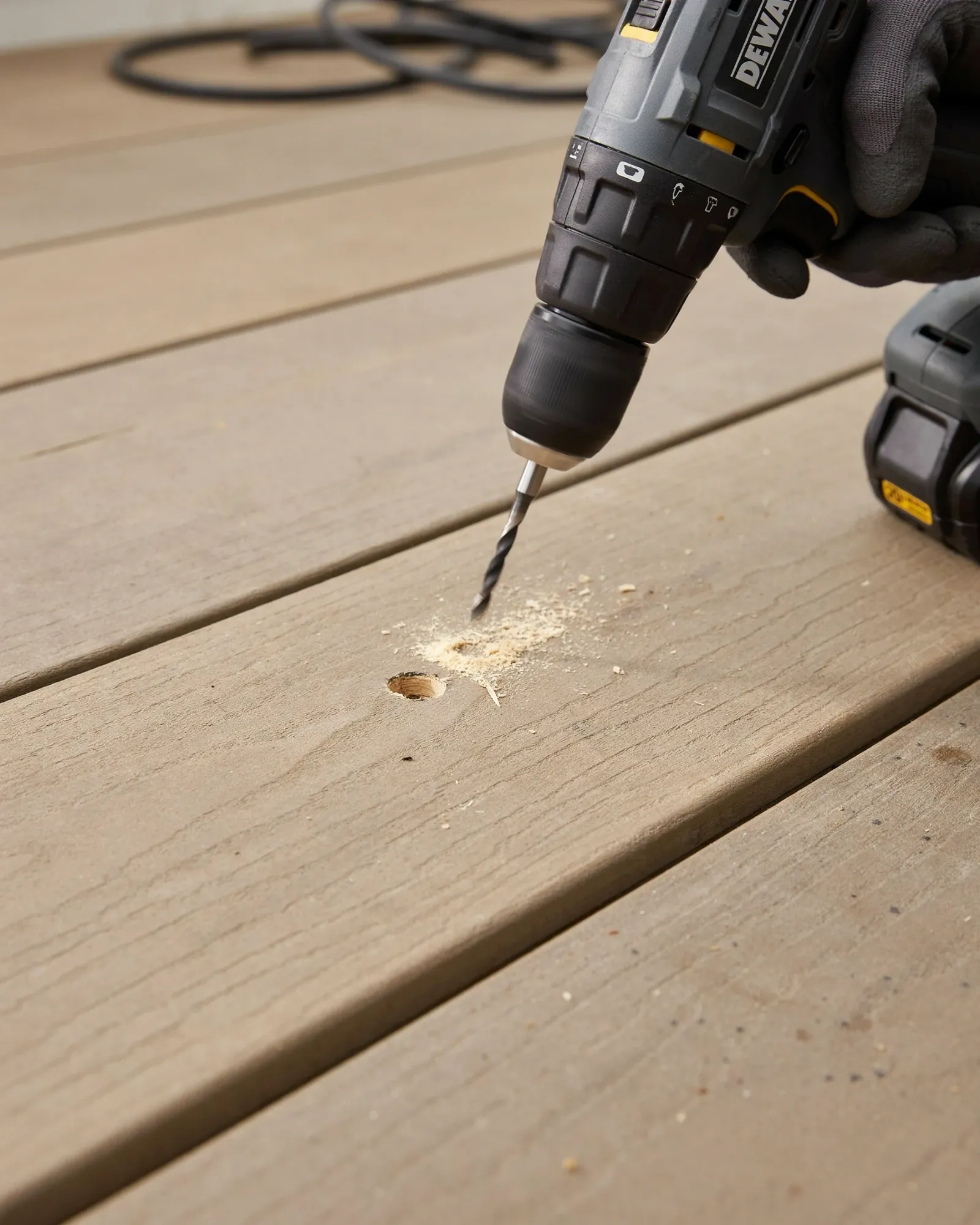
Screws certainly are used when building a terrace. However, that does not mean they have to go through the surface of every decking board. In a typical system, a screw may be used to fix a clip to a joist. In this case, the fixing remains practically invisible once the next decking board has been laid. Screws may also be used with starter clips, finishing profiles or other system components. Some manufacturers may also specify particular points for fixing a decking board directly. If so, you should use exactly the type of screw, hole preparation method and fixing location given in the instructions.
Does a composite decking board need to be pre-drilled before screwing?
If the specific system permits direct fixing with screws, creating a pilot hole is often important. However, you should not assume there is a universal hole diameter that suits all decking boards. Pre-drilling may reduce the risk of localised damage of the material and make it easier to drive the screw in under control. Particular care should be taken when working close to the ends and edges of the board. The manufacturer's instructions remain paramount. If they require pre-drilling, skipping this step simply to speed up composite decking installation is not a good idea.
Which screws should you choose for composite decking?
There is no single universal screw model suitable for all WPC structures. You need to consider both the decking board and the joist material. Fixing to a composite joist may require a different solution from a structure made of aluminium profiles. In outdoor conditions, the corrosion resistance of the fixing components is also important. The type of steel, coating or screw material should be selected to suit the system and the environment in which it will be used. That is why it is best to use screws for composite decking boards and fixing clips specified by the manufacturer of the system, rather than choosing random screws available in the workshop.
Why are fixing clips used so often?
Fixing clips solve several problems at once. Firstly, they allow you to create an attractive surface without visible rows of screws. Secondly, they help maintain even gaps between the decking boards. This is important for proper water drainage and for the system to work as designed. Thirdly, they are designed to work with the decking board profile and joist. As a result, fixing composite decking boards is more consistent than determining each screw position individually.
A screw should not restrict expansion.
This is one of the most important reasons why randomly screwing WPC directly into place can cause problems. Imagine a long decking board screwed very rigidly at many points. As the temperature rises, the material changes dimensions, but the fixings limit its ability to move. The resulting stresses have to be released elsewhere. That is why both expansion gaps and the correct fixing method are very important in WPC systems. More screws do not automatically mean a more stable deck. Sometimes an overly rigid fixing is precisely the mistake.
What can happen if a screw is driven in incorrectly?
The consequences depend on the board's construction, the position of the hole and the installation method. Potential problems include damage to the surface around the screw head, localised deformation, restricted movement of the board or an unattractive finish. With hollow profiles, the position of the hole in relation to the board's internal structure also matters. A screw tightened too much can also press into the surface locally. The principle of “the tighter, the better” definitely should not be applied when installing WPC.
Can you use ordinary wood screws?
You should not assume that an ordinary wood screw will be suitable just because a composite decking board contains wood. WPC is a different material from solid wood. What's more, the screw may work not only with the decking board, but also with a fixing clip and a joist made of aluminium or composite. Your choice should therefore be based on the requirements of the complete system. If the manufacturer offers dedicated WPC screws, using them is usually a much safer option than experimenting with random fixing components.
Screws and aluminium joists.
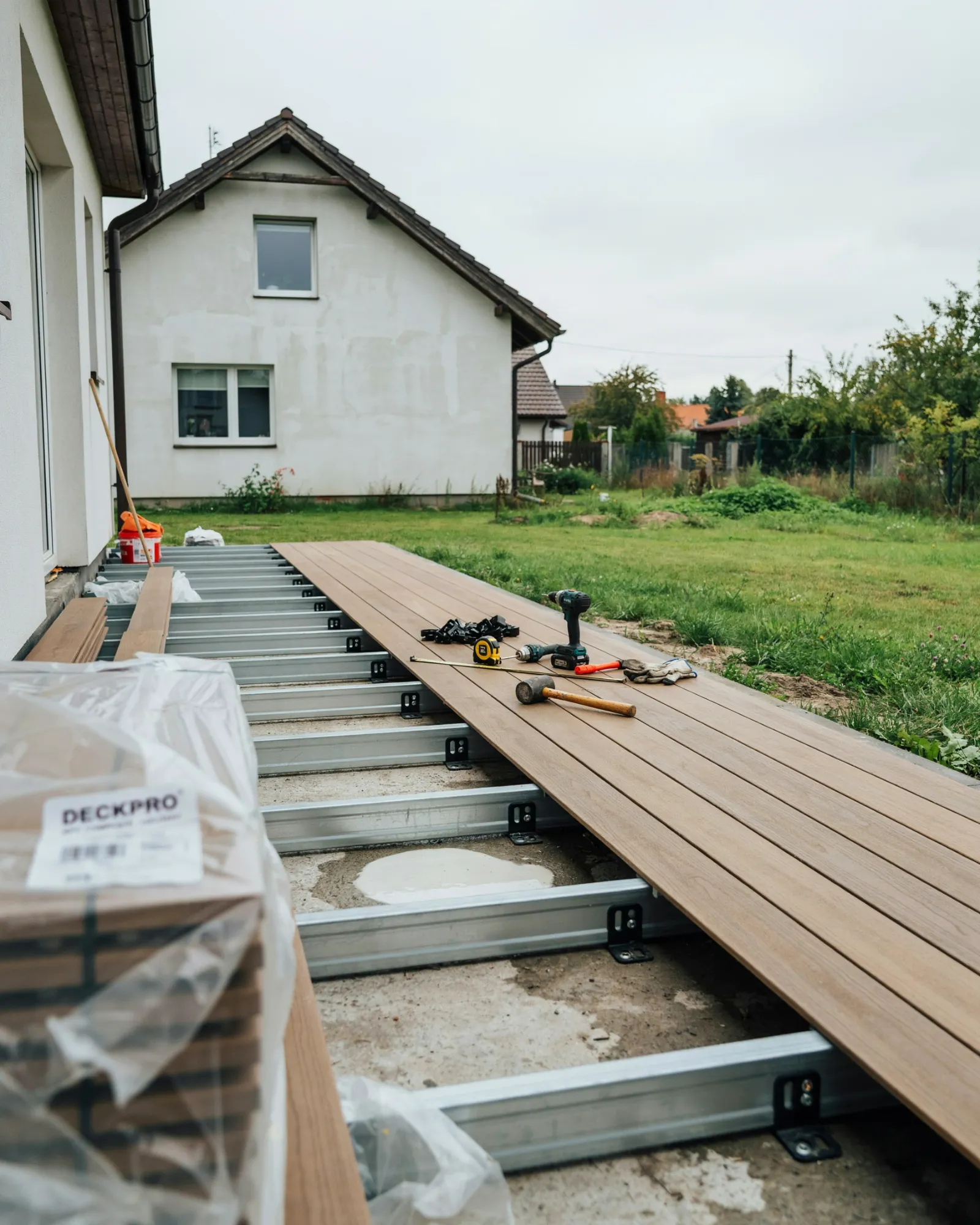
With an aluminium structure, it is particularly important to use fixing components designed to work with a metal profile. A fixing clip may look similar to one used with a WPC joist, but the way it is fixed does not have to be identical. Factors include the geometry of the aluminium profile, the thickness of its wall and the type of screw used. That is why aluminium joists for composite decking boards should be treated as components of a specific structural system.
What about installation on composite joists?
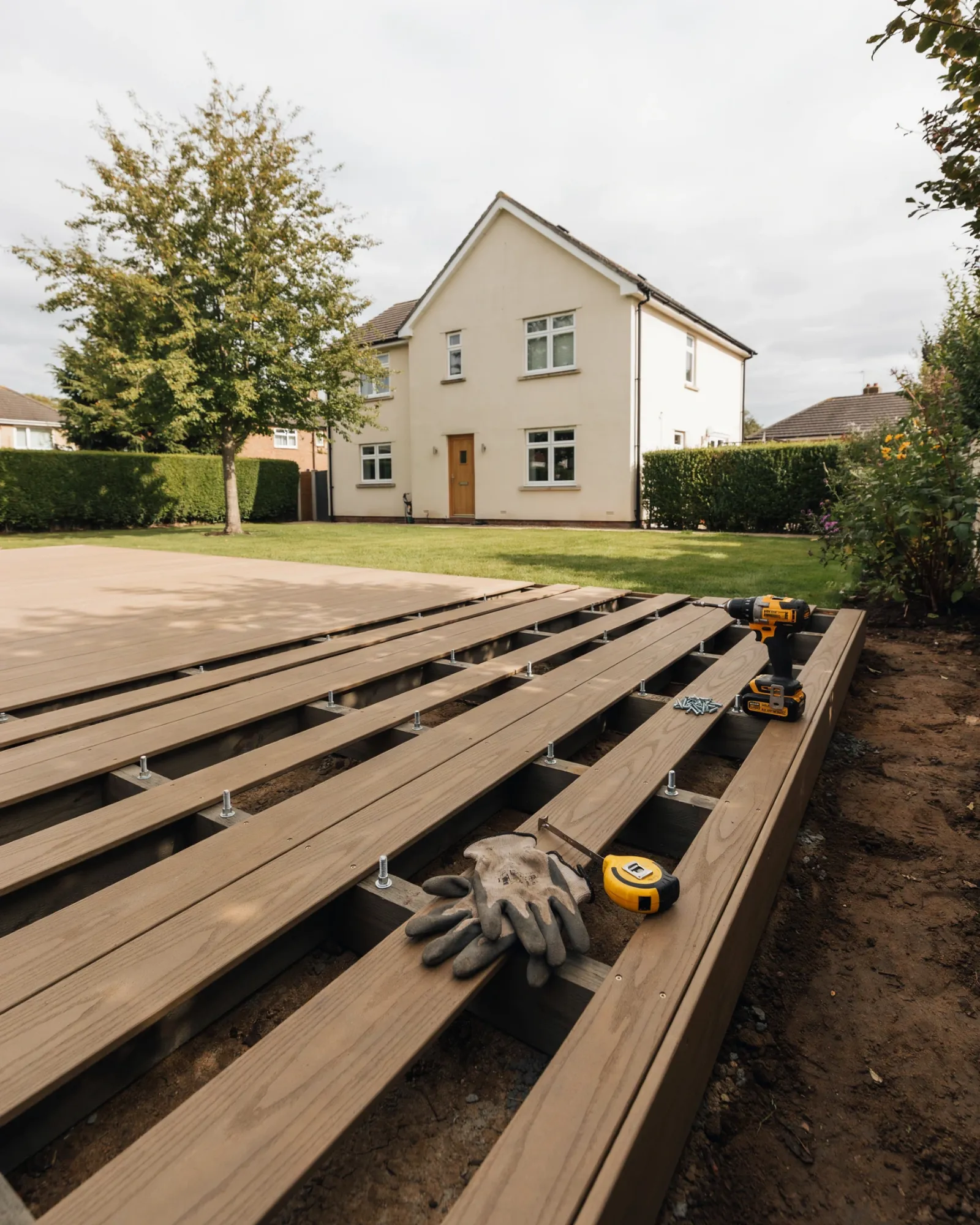
Compatible fixings should also be used with WPC joists. A composite joist has different characteristics from aluminium, so randomly swapping screws between systems may not be a good solution. In a typical installation, the fixing clip is placed in the side profile of the decking board and then fixed to the joist with the appropriate screw. The next decking board covers a large part of the fixing, leaving the deck surface neat and attractive.
What about the first and last decking boards?
The edges of a deck often require a different solution from the middle of the surface. Many systems use starter clips, which secure the first decking board without the need to make a visible hole in its top surface. How the last decking board is installed depends on the design of the specific system and how the edge is finished. It is particularly in these places that the temptation often arises to “just secure the board with a screw”. Before doing so, it is worth checking the instructions. The manufacturer may specify a much neater and safer solution.
Can you fix something to a finished composite deck?
This is a slightly different situation from fixing the decking board itself. Once the deck is complete, the owner may want to install a balustrade, pergola, lamp, planter, awning or another fixture. You should not automatically assume that a composite decking board is a structural component to which heavy fixtures can be safely screwed. For components carrying heavier loads, the fixing often needs to be transferred to the appropriate structure beneath the deck or to a separate foundation. This is particularly important for balustrades and pergolas, which are subject to considerable forces.
The most common mistakes when fixing WPC decking boards.
Several problems commonly arise when installing a deck yourself:
- driving ordinary screws in from above without checking the instructions,
- not drilling a pilot hole when the manufacturer requires one,
- over-tightening,
- using incompatible fixing clips,
- using the wrong screws for aluminium joists,
- restricting the required expansion gap,
- fixing heavy components to the decking board alone,
- leaving too little clearance from the ends and edges,
- ignoring the manufacturer's recommendations.
Some of these mistakes may not be visible immediately after the work is completed. Problems may only become apparent after temperature changes and successive seasons of use.
How to correctly prepare the installation of composite decking board?
Before starting work, it is worth treating the terrace as a complete system rather than a collection of separately purchased products. First, check the requirements for preparing the base and structure. Then determine the joist spacing, how they will be supported and where the boards will be joined. The next step is to plan the expansion gaps and water drainage. Only afterwards is it time for the clips and fixings. This approach helps avoid a situation where, during installation, it turns out that the screws available are not suitable for the joists or that the way they are screwed in prevents the board from moving correctly.
Can visible screws spoil the appearance of a terrace?
Yes, particularly if the terrace has a large, uninterrupted surface. One advantage of clip systems is that there are no regular rows of screw heads on the surface. The natural colour and texture of composite decking boards then remain the main visual feature. With top fixing, even small differences in screw position can be visible. There is also the matter of subsequent use. Dirt can collect around the fixing points, and an incorrectly seated head can create an uneven surface. So, if the system allows for concealed fixings, it is generally worth taking advantage of this option.
FAQ – screws and composite decking boards.
Can you screw directly into a composite decking board?
Technically, this is possible with many WPC boards, but direct fixing should only be carried out if the manufacturer of the particular system specifies it. As standard, many decking boards are installed using concealed clips.
Do you need to pre-drill a composite decking board?
If the manufacturer requires a pilot hole for direct fixing, it should be made. The diameter and method of drilling should follow the instructions for the specific board and screw being used.
Which screws should you use for WPC boards?
It is best to use screws recommended for the specific system. You need to take account of the board and clip, as well as the joist material.
Can you use ordinary wood screws?
You should not do this automatically. A WPC board is not an ordinary wooden board, and a screw chosen at random may not be suitable for the fixing system being used.
Is it better to install composite decking boards with clips?
In systems designed for concealed installation, clips are the correct solution. They help maintain neat gaps and work with the board profile in accordance with the manufacturer's specifications.
Can you attach a pergola to a composite decking board?
Heavy structural elements should not be fixed solely to the surface of a board without checking the load-bearing capacity and design. A pergola should have a suitably designed fixing to the supporting structure or foundation.
Can screws cause a WPC board to crack?
A screw that is unsuitable, incorrectly positioned or overtightened can cause local damage to the material. The risk also depends on the construction of the specific board.
So how should composite decking boards be fixed safely?
To answer the main question: in some systems, screws can be driven directly into a composite decking board, but this should not be done arbitrarily or treated as a universal installation method. If the manufacturer specifies a concealed clip system, that is the system you should use. If direct fixing is permitted in specific locations, you must use the specified screws, keep to the required distances and make the holes in accordance with the instructions. For a composite terrace, small installation details matter a great deal. Correct joist spacing, expansion gaps, compatible clips and suitable screws for composite decking boards together form a system that should perform in accordance with the manufacturer's specifications. So, instead of asking only “will the screw go into the board?”, it is worth asking the more important question: “does the manufacturer of this specific board specify this method of fixing?” The answer to that question should determine how the terrace is installed.
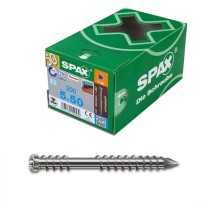
A2 stainless steel SPAX decking screw, silver 5x50
Available in packs of: 200 pcs | 500 pcs
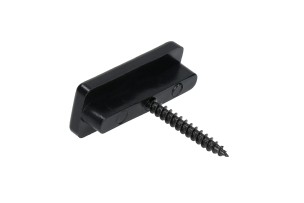
PLASTIC fixing clip + screw (100 pcs)
For boards: DUO | PREMIUM
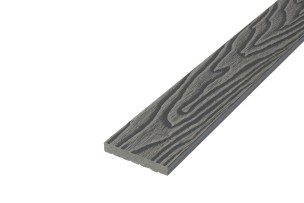
DUO composite skirting board 10x70x4000
Skirting boards available in 5 colours
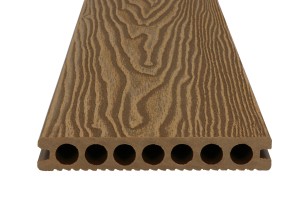
DUO composite decking board 23x148 - 2.9 m
Price per 1 linear metre of decking board: 21,30 zł



