Wooden or aluminium joists – which are better for decking?
Wondering which joists to choose when building a terrace? Compare wooden and aluminium joists, explore their pros and cons, and find out which will work better for your project.
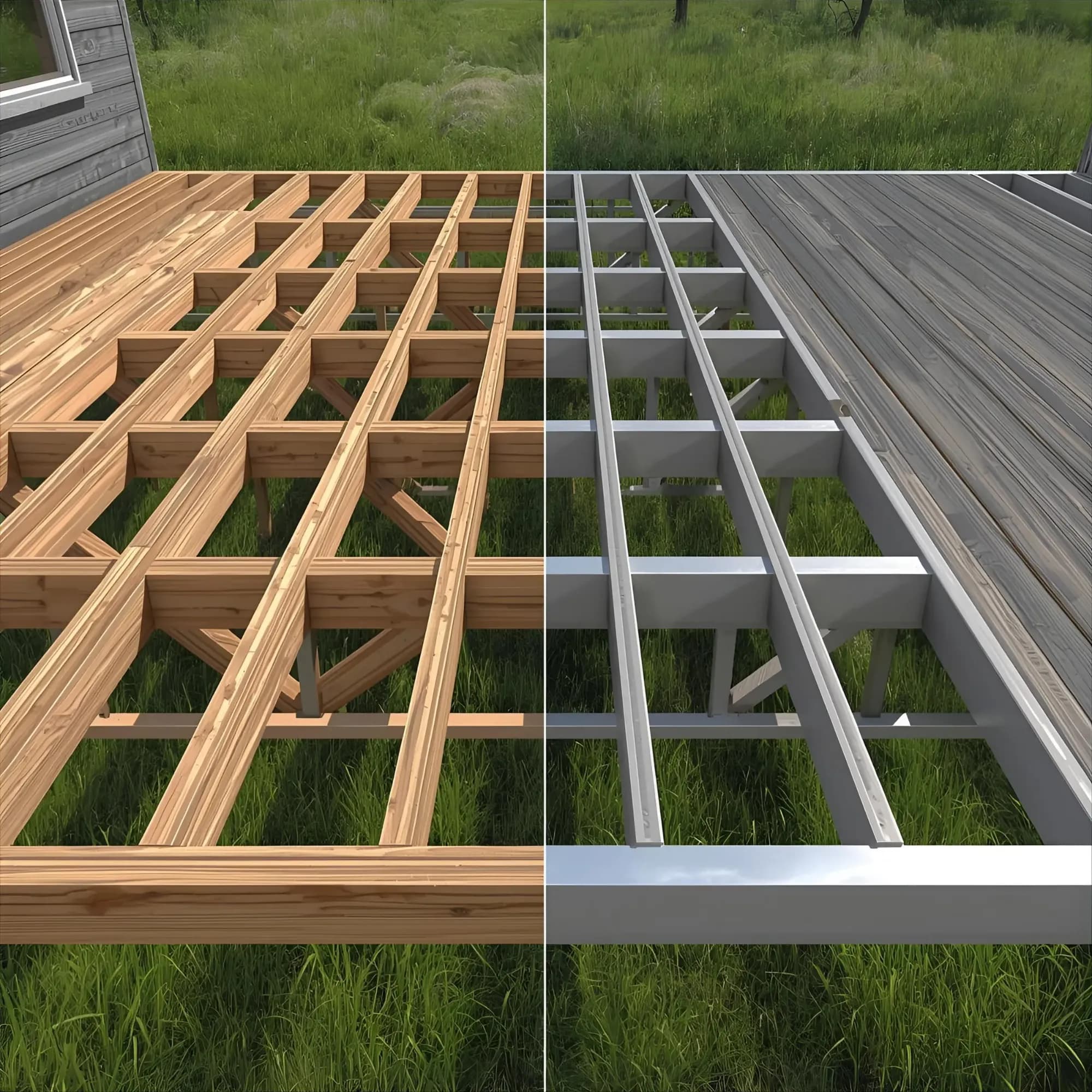
Wooden joists vs aluminium joists – which is the better choice for your decking?
Building a deck is an investment for years to come, so choosing the right materials is extremely important. While most of the attention is focused on the decking boards – natural or composite – what lies beneath them, namely the joists, is just as important. They are responsible for the stability, durability and safety of the structure.
There are two main types on the market: wooden joists and aluminium joists. Which should you choose? Let's find out!
What exactly are joists, and why are they so important?
Joists are horizontal load-bearing beams that form the framework of a deck. They are installed on a prepared base – concrete, pad foundations or supports – and the decking boards are laid on top. Properly selected joists affect:
-
the strength of the entire structure,
-
resistance to deformation,
-
the durability of finishing materials,
-
safety in use.
That's why choosing between wooden and aluminium joists is not just a matter of budget, but above all of practicality and comfort for years to come.
Joist comparison – a quick-reference table.
| Feature | Wooden joists | Aluminium joists |
|---|---|---|
| Price | ✔️ lower | ❌ higher |
| Durability | ❌ lower | ✔️ very high |
| Moisture resistance | ❌ limited | ✔️ excellent |
| Maintenance required | ❌ yes | ✔️ no |
| Dimensional stability | ❌ variable | ✔️ consistent |
| Ease of installation | ✔️ easy | ❌ more technical |
| Environmental impact | ✔️ natural wood | ✔️ recycled material |
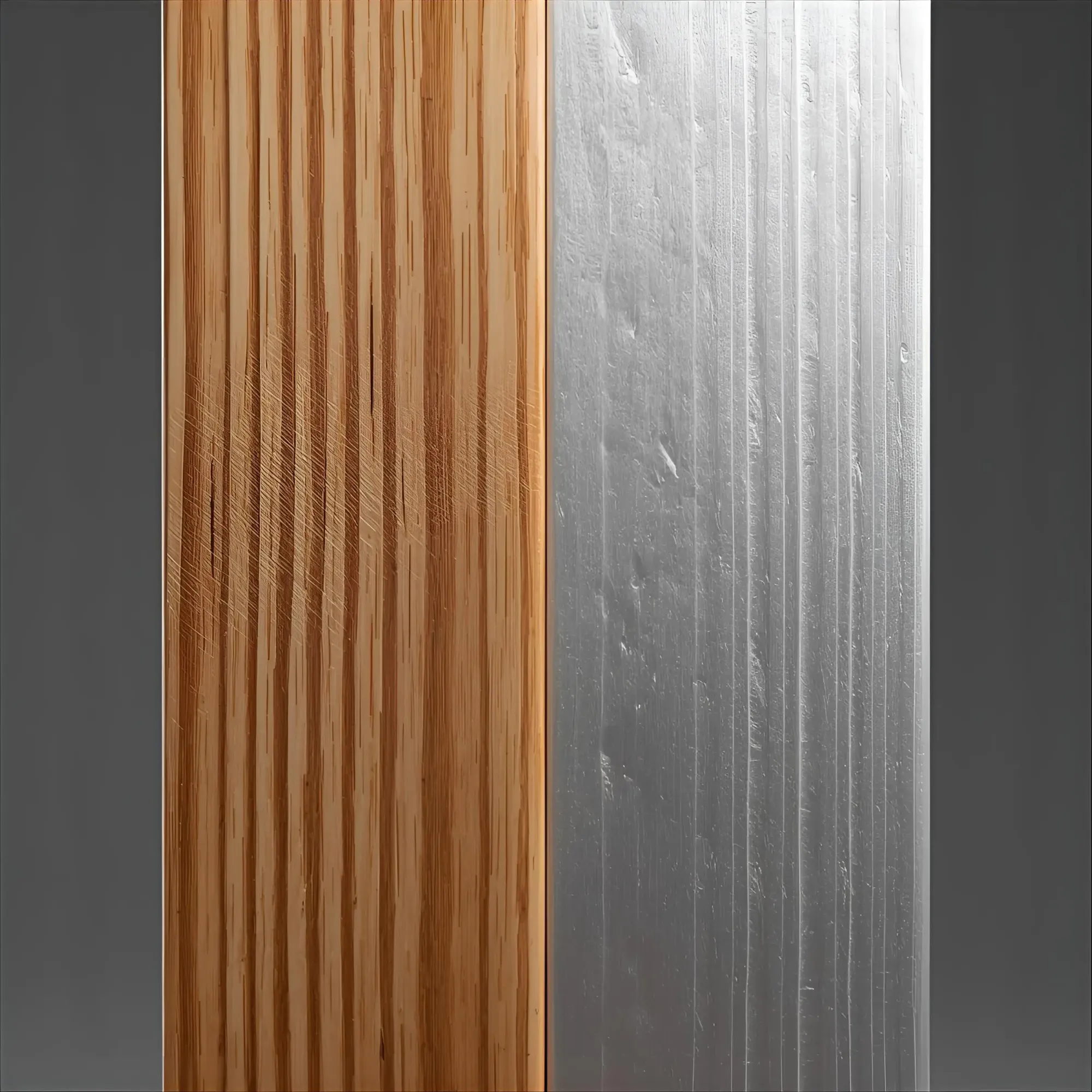
Wooden joists – a classic with its pros and cons
Advantages:
-
Natural look and aesthetics
Wooden joists (most commonly pine, spruce, larch or exotic hardwood) fit perfectly with the look of decking made from natural boards. -
Lower purchase cost
Wood is cheaper to buy than aluminium, which can make a difference over large areas. -
Easy to work with
Wood can easily be cut, drilled and adapted to uneven ground or unusual shapes. -
Material availability
Wooden joists are widely available from DIY stores and timber merchants.
Disadvantages:
-
Require treatment and regular maintenance
Even if pressure-treated, wood can rot, absorb water or biodegrade over time. -
Less resistant to moisture and pests
Depending on the quality of the wood, the risk of biological damage (fungi, mould, insects) can be considerable. -
Less dimensional stability
Wood moves in response to temperature and moisture – it can warp or crack.
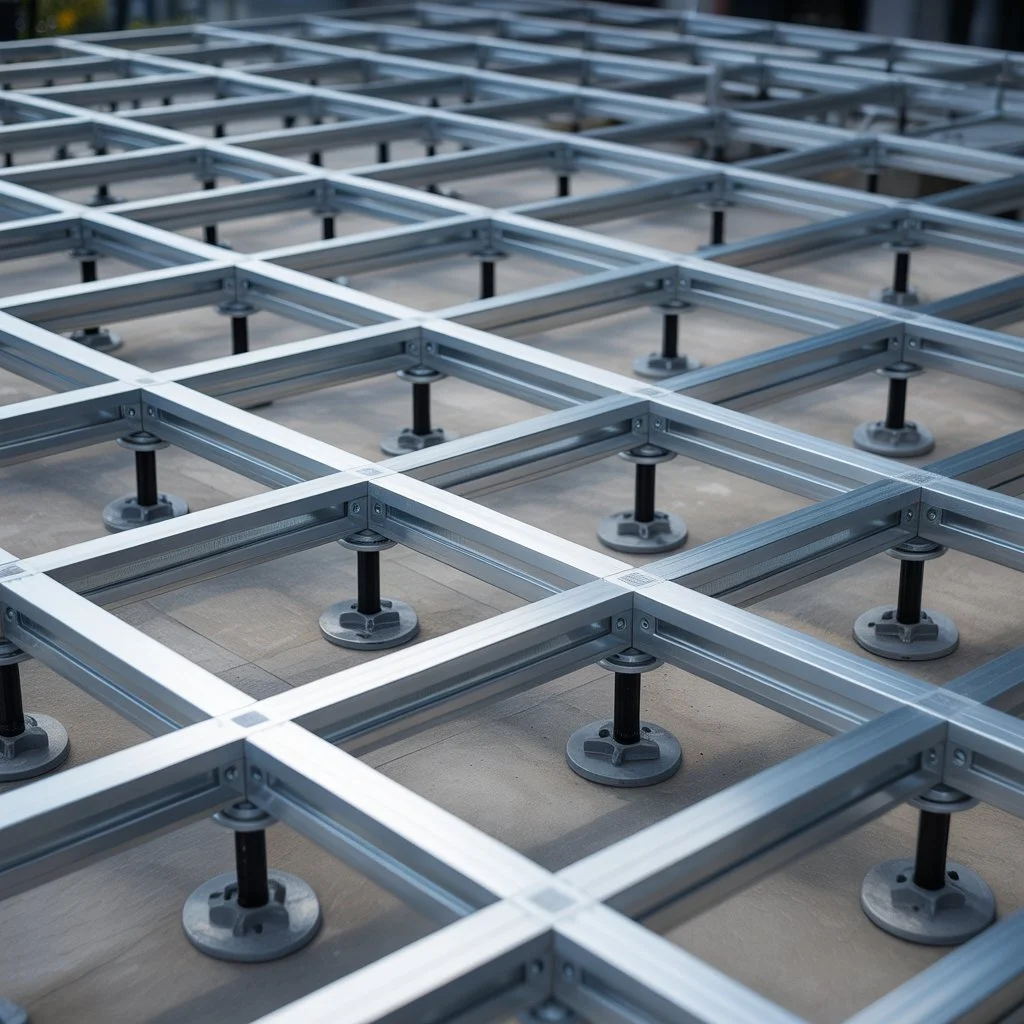
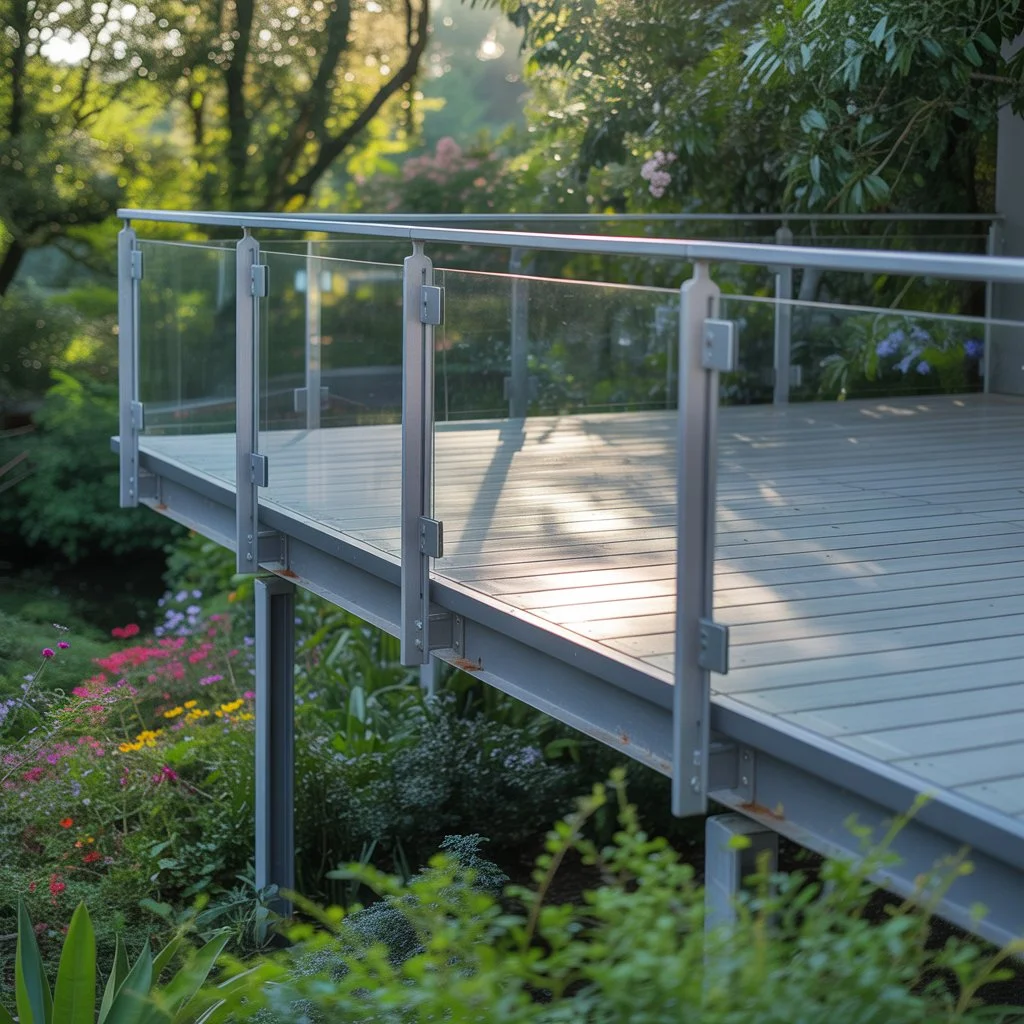
Aluminium joists – a premium, modern solution
Advantages:
-
Durability and resistance to the weather
Aluminium does not corrode, absorb moisture or rot, and requires no maintenance. -
Lightweight yet highly durable
Despite their low weight, aluminium joists offer high resistance to loads and mechanical damage. -
Excellent stability
They do not move like wood – they do not change dimensions, crack or warp. -
Long service life
Aluminium structures can last for several decades without needing replacement. -
Maintenance-free
An ideal solution for anyone looking for years of ‘peace of mind’.
Disadvantages:
-
Higher price
Aluminium joists can cost 2–3 times as much to buy as wooden ones. -
Require precise installation
Cutting or fastening them may require specialist tools (e.g. for metal). -
Lack the ‘warmth’ of wood
Although they are aesthetically pleasing, they will not give your decking the same character as natural wood.
When should you choose wooden joists?
Wooden joists are a good choice if:
-
You have a limited budget.
-
You are building a small deck (e.g. beside a holiday cottage).
-
You are using natural decking boards and want to keep the materials consistent.
-
You are prepared to carry out regular maintenance.
Tip: Choose only certified, well-treated wood. Exotic hardwood (e.g. bangkirai) is a better choice, as it is naturally resistant to moisture and pests.
When is it worth investing in aluminium joists?
Aluminium joists are a good choice when:
-
The deck is large and will be used intensively.
-
You want to avoid any maintenance in the future.
-
Maximum durability and safety are important to you.
-
You are building a modern deck, for example with composite decking boards.
Pro tip: Aluminium joists are recommended for composite decking boards – manufacturers often offer a longer warranty in that case.
What practical experience tells us – installers’ views
Most experienced decking installers say that:
-
Wooden joists are OK for short-term realisation or with a limited budget.
-
Aluminium joists are an investment in comfort and peace of mind for years to come.
If you plan to use your terrace for 10–20 years, it is worth paying extra for a sturdier structure.
Summary – what should you choose?
The choice between wooden and aluminium joists depends on:
-
budget,
-
intended intensity of use,
-
type of decking boards (wood vs composite),
-
expectations regarding durability and maintenance.
👉 For durable terraces with composite decking boards, we recommend aluminium joists.
👉 For smaller, budget-friendly projects, well-protected timber will do the job too.
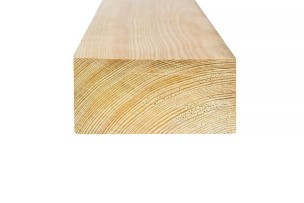
Wooden terrace joist SIBERIAN LARCH, finger-jointed, 45x70
Available lengths: 5,90m | 6,00m
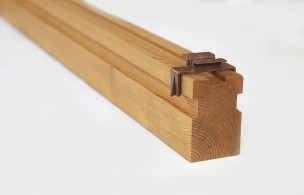
Wooden terrace joist THERMO PINE CLIP 45x68
Available lengths: 3,90m | 4,80m