Types of Composite Decking Boards – Which Should You Choose and Why?
Discover the different types of composite decking boards – WPC, PVC, brushed, grooved, and fitted with fixing clips or screws. Find out which decking boards are best suited to your patio.
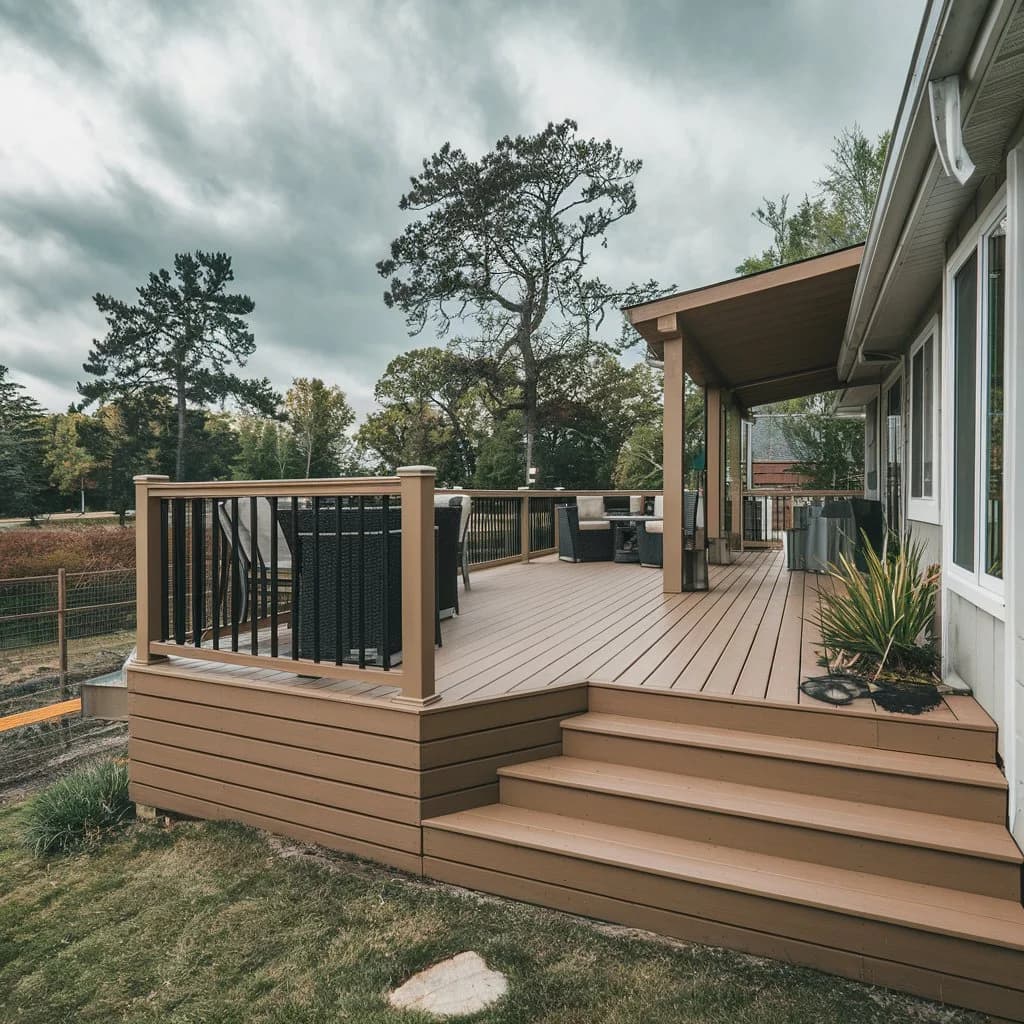
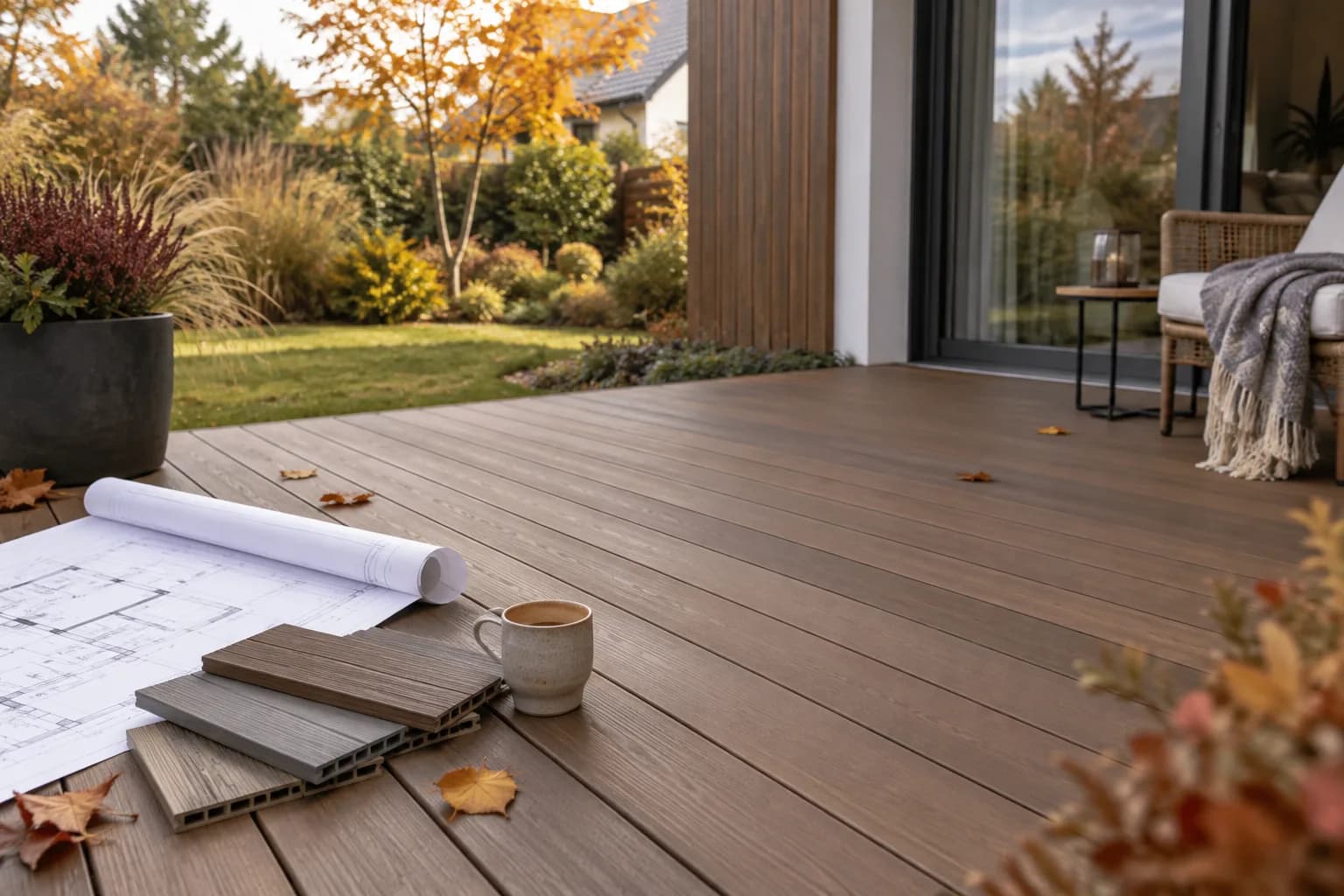
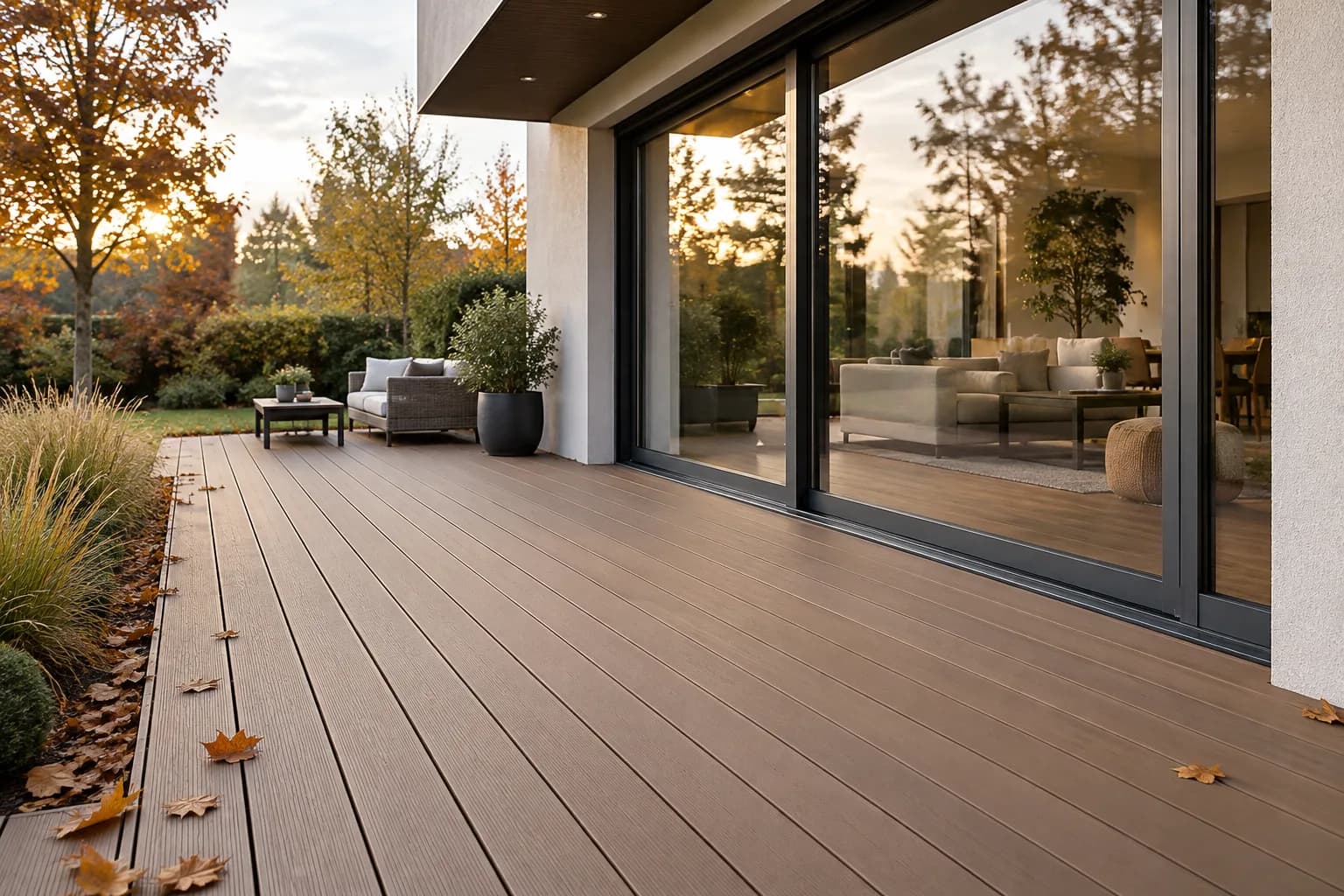
Composite decking boards have been gaining popularity for years as one of the best solutions for finishing terraces, balconies and garden spaces. Why? They offer an excellent combination of the appearance of natural wood with exceptional durability and resistance to weather conditions. With composite decking boards, you can enjoy a beautiful terrace without the regular maintenance required by traditional timber. But before you decide to buy, it is worth understanding the different types of composite decking boards, how they differ and which will best meet your needs. In this article, we’ll look at the different types of composite decking boards, divided into categories according to their composition, surface finish and installation method.
Types of composite materials.
There are several different types of composite decking boards available on the market, which vary in their material composition. Each has unique properties that affect its durability, appearance and use.
1. Wood-plastic composite decking boards (WPC).
Wood-Plastic Composite (WPC) is the most popular type of composite decking board. WPC is made up of wood fibres (usually around 50–60%) and plastic, such as polyethylene or polypropylene. These boards combine the natural appearance of wood with the durability of plastic, making them an ideal choice for terraces and balconies.
Advantages of WPC:
- Natural appearance – wood fibres give WPC boards an appearance similar to real wood.
- Resistance to weather conditions – the plastic in WPC makes it resistant to moisture, mould and UV radiation.
- Long service life – WPC boards are durable and resistant to mechanical damage, making them ideal for outdoor spaces used for many years.
However, although WPC boards look very natural, they may sometimes require basic maintenance, such as washing with water, to keep them looking fresh.
2. Decking boards made entirely of plastic (PVC).
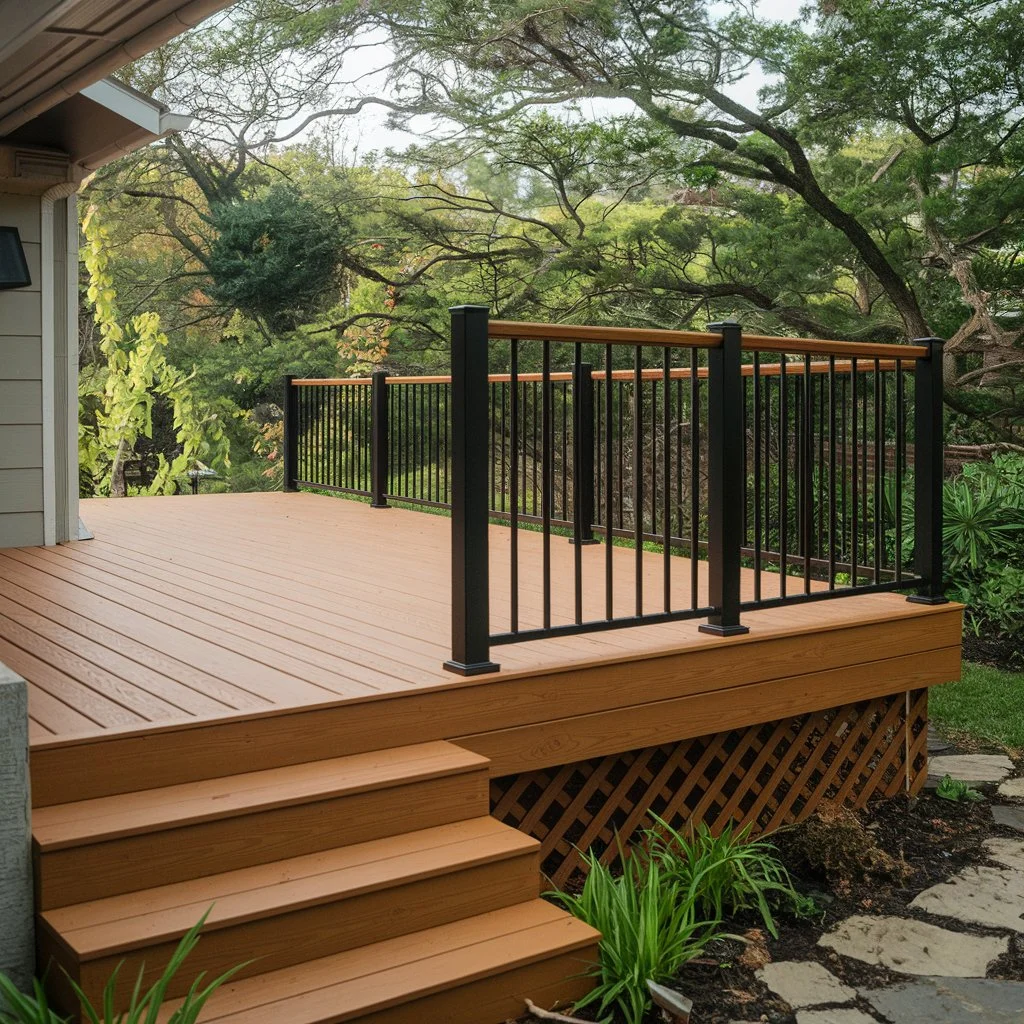
The second type of composite decking board is made entirely of plastic, usually polyvinyl chloride (PVC). These boards are 100% synthetic, giving them exceptional resistance to moisture and other harsh outdoor conditions.
Advantages of PVC:
- Moisture resistance – PVC boards do not absorb water, making them an ideal solution for terraces exposed to heavy rainfall.
- Easy to maintain – PVC boards require virtually no maintenance apart from occasional cleaning.
- Lightweight – PVC is lighter than wood-based composites, making installation easier and reducing the load on the terrace or balcony structure.
However, boards made entirely of plastic may look slightly less like natural wood than WPC composites, which may be a drawback for some people. On the other hand, their exceptional moisture resistance makes them an ideal choice for spaces exposed to water – for example, around swimming pools.
Surface finish.
Alongside the material composition, the surface finish of composite decking boards is also an important consideration. The type of finish you choose will affect the appearance of your terrace and its functionality, especially in difficult weather conditions.
1. Brushed boards.
Brushed composite decking boards have a subtle, non-slip texture. The brushing process involves removing some of the material from the board’s surface, giving it a more matt, natural appearance similar to wood. This technique also makes the boards safer – they provide good grip even when wet.
Advantages:
- Slip resistance – ideal for areas often exposed to moisture, such as terraces by swimming pools or balconies.
- Natural appearance – brushing makes the boards look more like natural wood, adding elegance.
2. Grooved boards.
Grooved boards have distinctive grooves on their surface. The grooves are not only decorative but also practical – they provide better grip, particularly in areas exposed to moisture. Grooved composite decking boards are ideal for terraces and outdoor steps, where safety matters.
Advantages:
- Better grip – grooved boards are more slip-resistant, which is essential on surfaces that may be wet.
- Water drainage – grooves help water run off the boards, preventing puddles from forming.
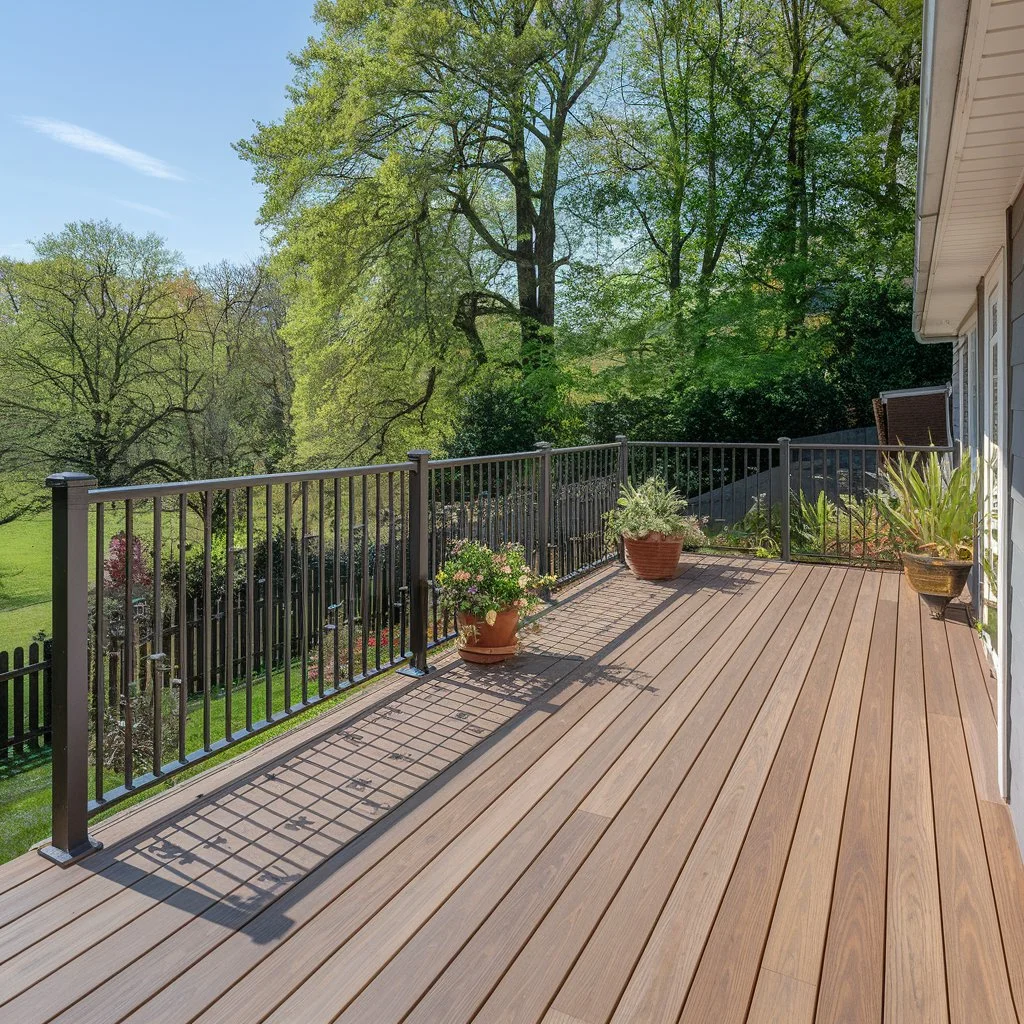
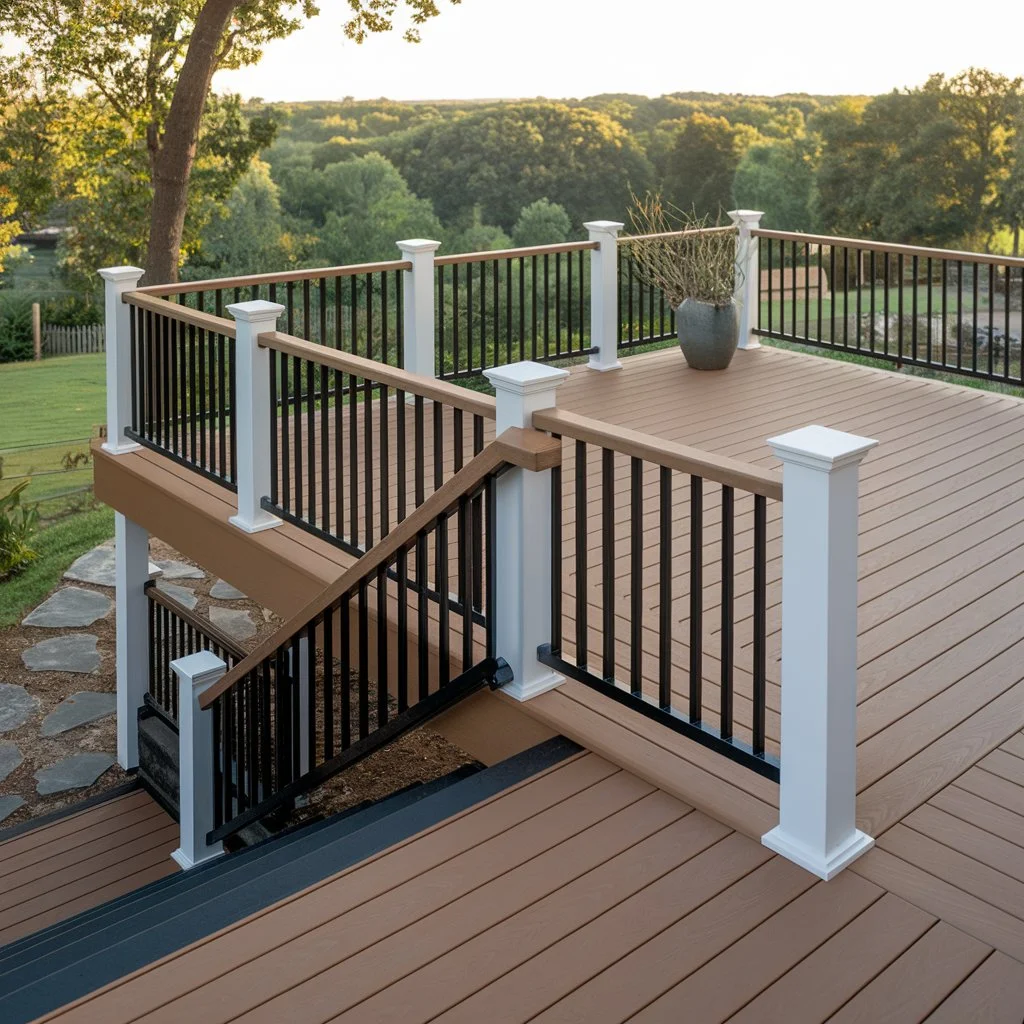
3. Smooth boards.
Smooth composite decking boards have a more uniform and elegant surface, without visible grooves or textures. They are easy to keep clean and have a more modern look. Smooth boards may be the ideal choice for those who prefer a minimalist design for their patio or balcony.
Advantages:
- Elegant appearance – the smooth surface gives the boards a modern, minimalist style.
- Easy to clean – the absence of grooves makes it easier to keep the surface clean.
Installation methods.
It is not only the type of board and its finish that matter, but also the installation method. Choosing the right fixing system can affect the appearance and durability of the patio.
1. Boards installed with visible screws.
This is the most traditional method of installing composite decking boards, in which the boards are screwed directly to the joists. The screws are visible on the surface of the boards, which some people may find less attractive.
Advantages:
- Simple installation – installing boards with visible screws is quick and straightforward.
- Durable connection– this system ensures a stable connection between the boards and joists.
2. Boards installed with concealed clips.
With this method, composite decking boards are installed using special clips that are not visible on the patio surface. This solution creates a more attractive finish, as no fixing components are visible.
Advantages:
- Appearance – the absence of visible screws makes the patio look more elegant.
- Easier board replacement – if one board is damaged, it is easier to replace it without having to dismantle the entire surface.
Summary.
Choosing the right composite decking boards depends on many factors, such as the type of surface, climate, appearance and budget. Wood-plastic composite decking boards (WPC) are the most popular, offering a natural look and durability, while boards made entirely of plastic (PVC) stand out for their exceptional moisture resistance. The finish is also an important consideration – brushed boards offer a non-slip surface, grooved boards provide better grip, while smooth boards are easy to maintain and ideal for modern designs. Ultimately, the choice of installation method (visible screws or concealed clips) also affects the appearance and durability of your patio. Each type of composite decking board has its own unique properties, which are worth considering before making your final choice.
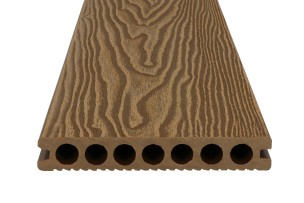
DUO composite decking board 23x148 - 4,0 m
Price per 1 linear metre of board: 21,29 zł
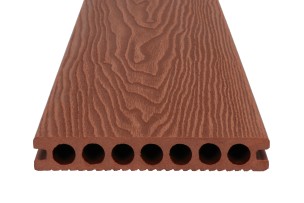
DUO composite decking board 23x148 - 4,5 m
Price per 1 linear metre of board: 21,30 zł
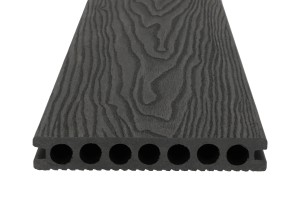
DUO composite decking board 23x148 - 5,0 m
Price per 1 linear metre of board: 21,30 zł
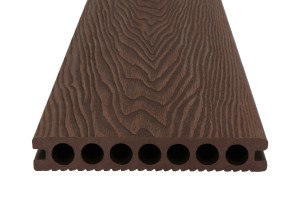
DUO composite decking board 23x148 - 3.5 m
Price per 1 linear metre of decking board: 21,30 zł