
What are the best ways to protect a composite decking terrace from moisture?
Protecting a composite deck from moisture is key to its durability. Find out which methods work best, how to ensure correct installation and which protective products to choose to keep your deck looking like new for years!
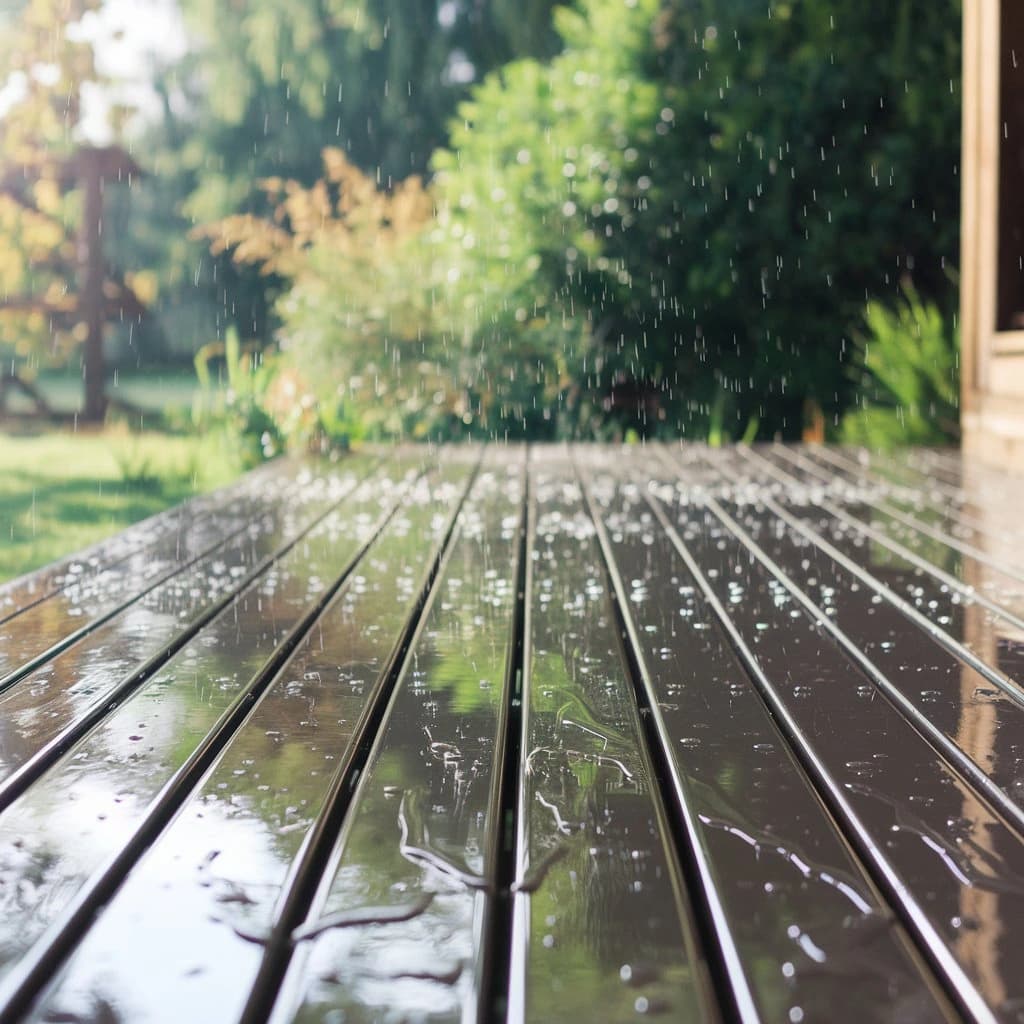
Composite decking is becoming increasingly popular thanks to its durability and resistance to changing weather conditions. Made from a mixture of wood and plastics, composite decking boards are less prone to damage than traditional timber. However, moisture – especially in our Polish climate, where rain and snow are frequent – can lead to problems such as standing water, mould or discolouration. How can you effectively protect your decking from moisture to preserve its appearance and functionality? Below, you’ll find practical tips and proven solutions to keep your decking in perfect condition all year round.
Correct installation – the key to durability.
One of the most important ways to protect composite decking from moisture is to install it correctly. Even the highest-quality decking boards will not perform properly if they are installed incorrectly. Problems with water drainage, moisture building up beneath the boards or an uneven base can weaken the structure and cause the surface to deteriorate more quickly.
How can you ensure correct installation?
The base must be properly prepared before installing the decking. Ideally, it should be stable, dry and well levelled. If you plan to install it on the ground, use a drainage layer, such as gravel or crushed stone, to allow water to drain away effectively and prevent it from collecting beneath the boards.
-
Maintaining a slope:
Composite decking should be installed with a slight slope (around 1-2%) to allow water to drain freely in the chosen direction. This is particularly important in the Polish climate, where rainy days are the norm. Without a slope, water may collect and puddles may form on the decking surface.
-
Correct spacing between boards:
Composite decking boards should be installed with suitable gaps to allow air to circulate freely and water to drain away. Incorrectly chosen gaps can lead to moisture condensation, which in turn encourages mould and algae to grow.
The supporting structure of the decking, or joists, should be made from materials that resist moisture. Plastic or aluminium joists are the best choices, as they do not rot and are exceptionally durable. Timber joists require additional treatment to prevent moisture-related problems.
Regular decking cleaning.
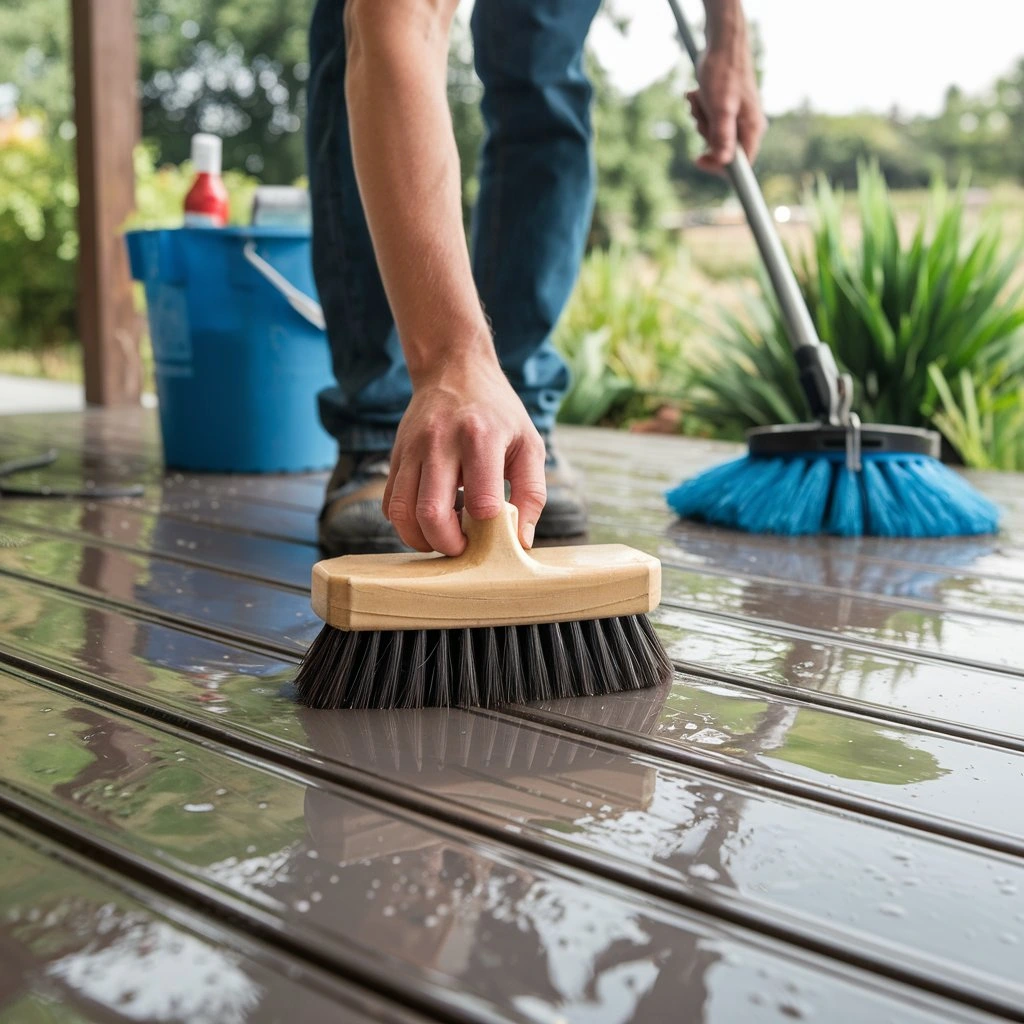
Composite decking, like any other type of surface, requires regular care to maintain its appearance and durability. If moisture is left on the boards for a long time, it can lead to a build-up of dirt, algae and mould, which not only look unsightly but can also affect the material’s durability.
How can you keep your decking clean?
-
Daily cleaning:
Remove leaves, sand, branches and other debris from the decking surface, as these can trap moisture. An ordinary soft-bristled broom or a garden vacuum is all you need. This will prevent moisture from building up in the gaps between the boards.
-
Periodic washing:
Wash the decking at least twice a year – in spring to remove winter dirt, and in autumn to prepare it for the winter season. Use water with a mild detergent and a soft brush. You can use a pressure washer, but only at low pressure to avoid damaging the surface of the boards.
-
Removing mould and algae:
If you notice a green film on the decking, use specialist products to remove mould and algae. They are particularly worth using in shaded areas, where moisture lingers for longer.
Moisture protection – impregnation and protective products.
Composite decking boards are water-resistant, but additional protection with protective products can significantly improve their durability and make day-to-day care easier.
Which products should you choose?
-
Hydrophobic products:
These products create an invisible layer on the surface of the boards that repels water and prevents it from being absorbed. This makes the decking less prone to dirt building up and easier to clean. Hydrophobic products are easy to apply – simply brush or roll them onto the clean surface of the boards.
-
Products to combat mould and algae:
These types of products eliminate microorganisms that can develop in damp conditions. Using them once or twice a year prevents green film from forming and protects the boards from damage.
-
Impregnators designed for composite decking:
Some companies offer specialist impregnators created for composite decking boards. They strengthen the structure of the boards, protect them against water and UV radiation, and give the surface a subtle sheen.


Using your decking properly.
Even the best-installed and protected composite decking needs to be used properly to avoid problems with moisture. Small oversights often lead to damage that could easily have been avoided.
-
Do not leave wet items on the decking:
Wet plant pots, mats or accessories can cause moisture to build up on the surface of the boards. To prevent this, use pot stands and regularly remove water from the decking surface.
-
Take care of winter maintenance:
Snow should be cleared from the decking regularly to prevent it from melting and then freezing again. Use plastic shovels for this, as they will not scratch the surface of the boards.
-
Avoid using salt on the decking:
Salt, which is often used in winter, can cause micro-damage to the composite structure. If the surface is icy, it is better to use sand, which is safer for the decking surface.
Regular inspections and repairs.
Every deck, even one that is well protected, needs regular inspections. It is particularly worth checking the condition of the boards and the water drainage system after heavy rainfall or winter.
What should you check?
-
Condition of the composite decking boards:
Check the surface of the boards for cracks, scratches or other damage that could lead to moisture building up.
-
Drainage system:
Make sure that water is effectively drained from the decking surface. Blocked drains can cause the structure to become flooded.
-
Joists and supporting structure:
Check the condition of the joists regularly, especially if they are made of wood. If there are problems with moisture, apply additional impregnation.
Summary.
Protecting composite decking against moisture is key to its longevity and attractive appearance. Proper installation, regular care, the use of specialist products and taking care with everyday use will let you enjoy your decking for many years. Remember that investing in protection now can save you the cost of potential repairs in the future. Look after your composite decking – it is a space that should serve you all year round, whatever the weather!

COMPO-CLEAN cleaner for composite decking - 1L
For composite decking boards
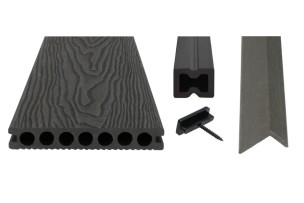
DUO composite decking system for a 50m2 deck - GRAPHITE
DUO composite system designed for a deck measuring 5m x 10m
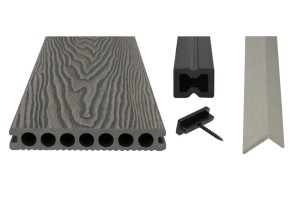
DUO composite decking system for a 50m2 deck - Light grey
DUO composite system designed for a deck measuring 5m x 10m
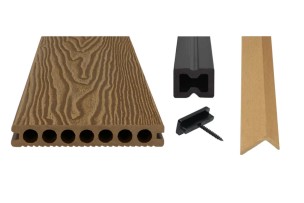
DUO composite system for a 50 m2 terrace - Honey
DUO composite system designed for a terrace measuring 5 m x 10 m