Grooved or smooth composite decking board – which should you choose for your terrace?
Grooved or smooth composite decking board? Compare the differences, advantages and disadvantages of both surfaces. Find out which composite decking board is best suited to a terrace, balcony or poolside.

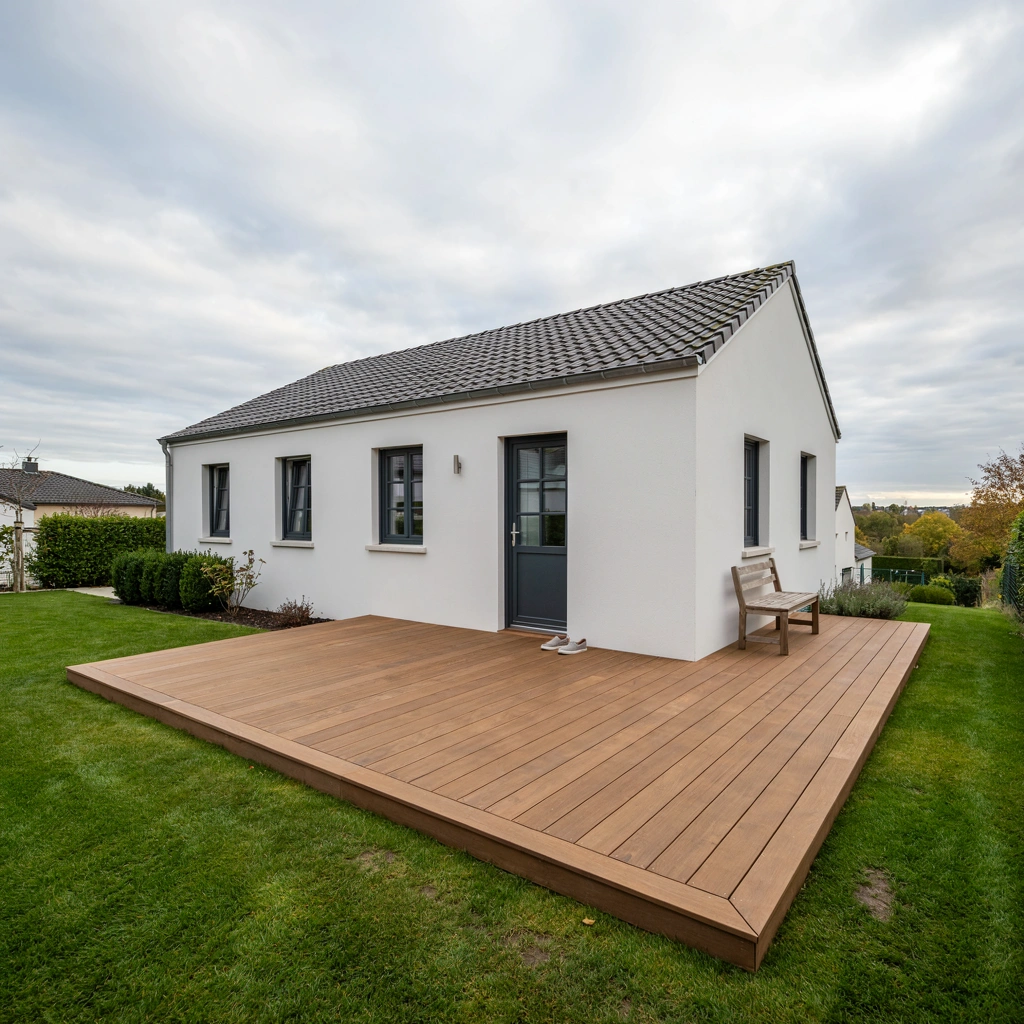
When choosing composite decking for a terrace, we usually start with the colour. Charcoal, brown, shades of natural wood – there are plenty of options. A little later, however, another question arises: composite decking board: grooved or smooth? And here, your choice should not depend solely on appearance. The type of surface affects the character of the entire terrace, how it is cleaned and how visible dirt is; for certain products, it also affects the grip of a wet surface. What is more, the term ‘smooth’ does not always mean a perfectly flat board. It may be brushed, matt or embossed with a woodgrain texture. So let’s take a closer look at both options and see which composite decking board is best suited to different applications.
What is a grooved composite decking board?
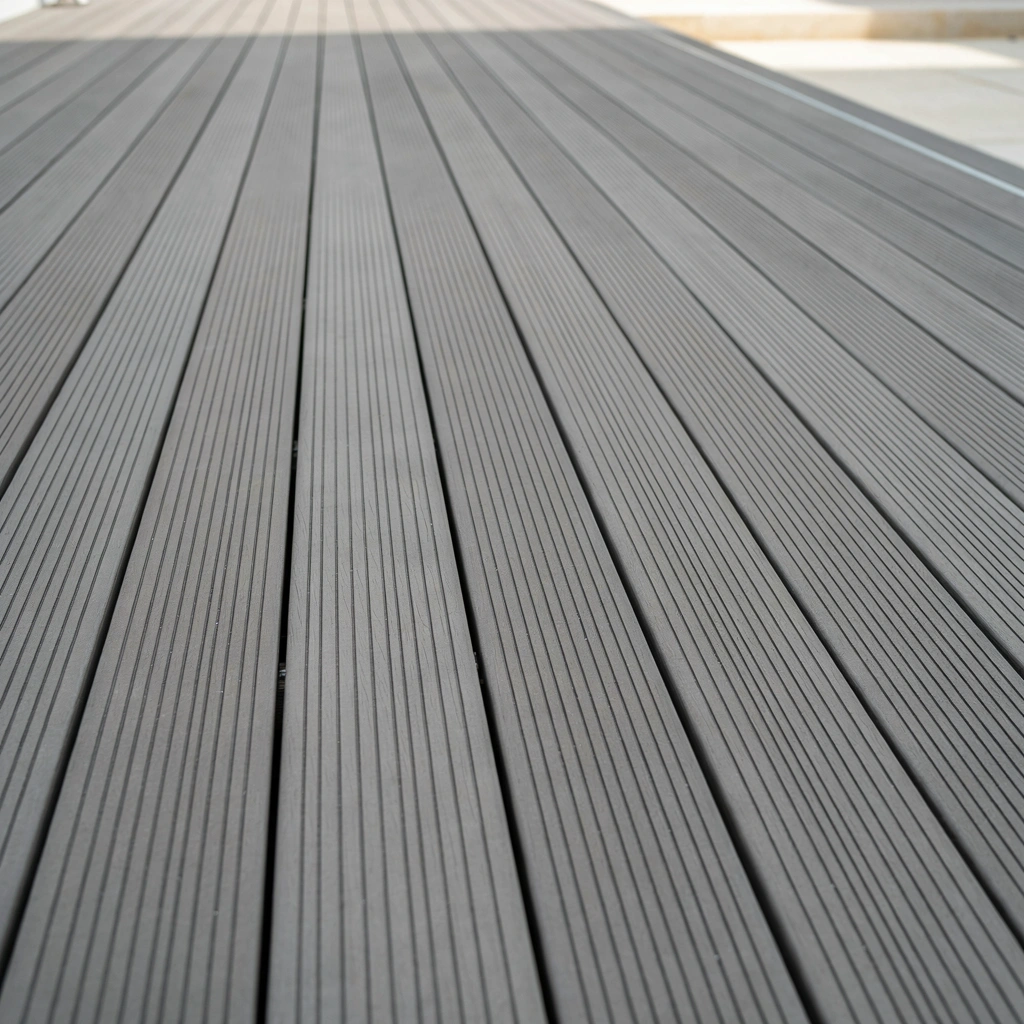
A grooved composite decking board has lengthwise grooves on its surface. Depending on the model, the grooves may be very fine, wide or combine several different patterns. This is one of the most distinctive looks for WPC terraces. The regular lines give the surface a neat appearance and work well with both modern and more traditional buildings. However, grooves are not purely decorative. The surface texture can affect grip, although you should not automatically assume that every grooved board is non-slip. The properties of a specific product are determined by its specifications and the manufacturer's test results.
What is a smooth composite decking board?
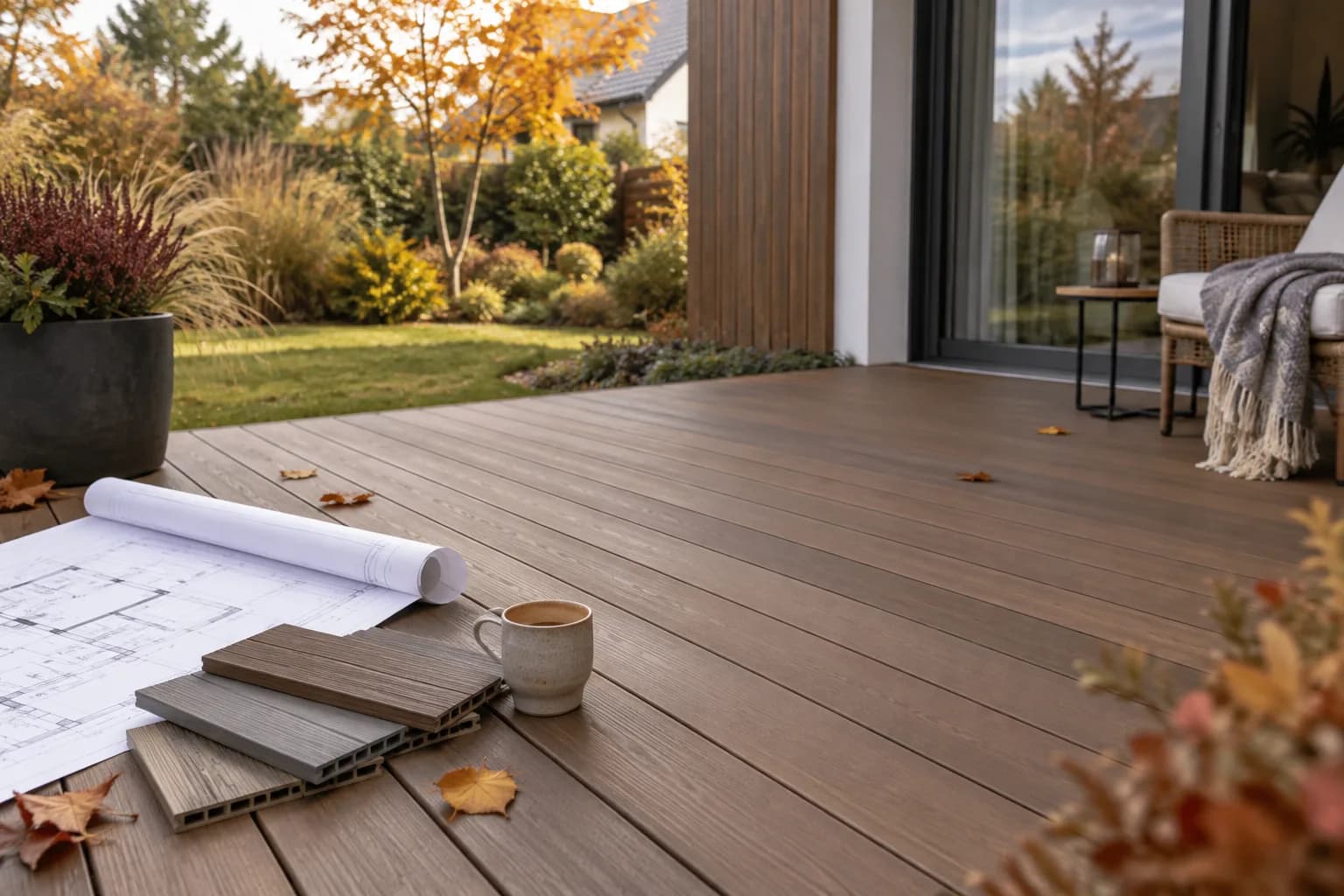
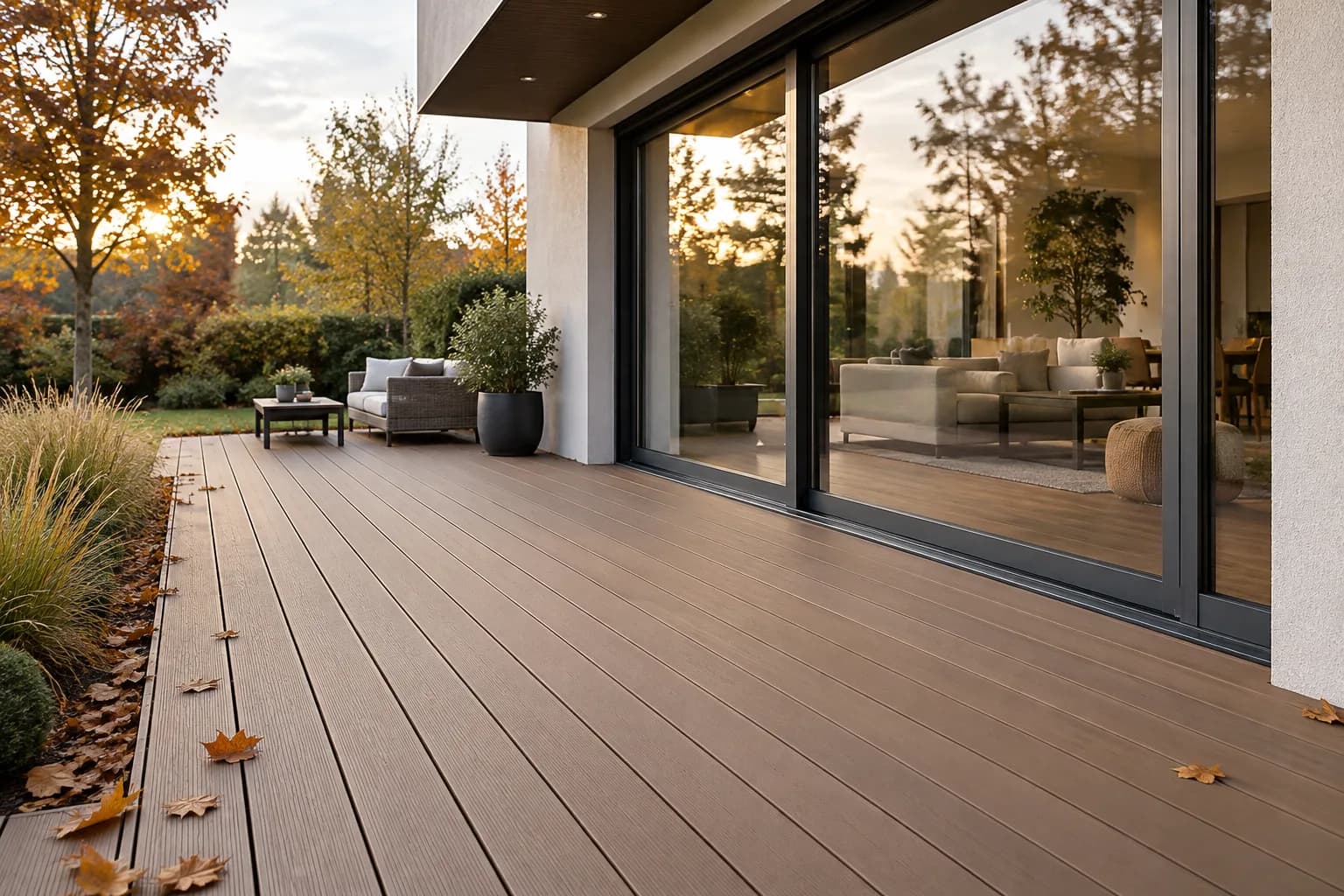
A smooth composite decking board creates a more uniform surface. In practice, boards described as smooth often have subtle brushing or embossing that imitates the grain of natural wood. The effect is subtler than with pronounced grooves. These boards look great alongside modern homes with large windows, simple façades, aluminium pergolas or minimalist garden designs. If you want a terrace that resembles natural wooden boards, a wood-textured option may be particularly appealing.
Grooved or smooth decking board – which is less slippery?
This is one of the most common questions asked before buying. It is easy to come across the claim that a grooved composite decking board is always less slippery than a smooth one. In practice, the matter is more complex. Grip depends, among other things, on:
- the surface texture,
- the manufacturing technology,
- the presence of water,
- dirt on the board,
- the surface finish.
If the terrace is to be built next to a swimming pool, hot tub, jetty or another place often exposed to water, it is worth checking the slip-resistance properties declared by the manufacturer for the specific model. Grooves alone should not be treated as a substitute for technical data.
Which board is easier to keep clean?
A surface with a shallower texture may have a slight advantage here. Sand, dust, pollen, soil and small pieces of leaves can collect in the grooves of a grooved board. This does not mean that the terrace is difficult to maintain, but it may sometimes need more thorough brushing in the direction of the grooves. A smooth composite decking board or a lightly brushed one may be quicker to sweep. Whichever option you choose, regular removal of dirt and washing in accordance with the manufacturer's instructions are the basics of maintenance.
What about water on the surface?
You may come across the opinion that grooves automatically drain water from a terrace. This is a considerable oversimplification. Proper water management depends above all on the construction of the composite terrace, the installation method and maintaining the required gaps. Water should not remain trapped beneath the structure. This is why a suitable substrate, ventilation, gaps between boards and installation solutions that comply with the manufacturer's instructions are important. The type of board surface is just one element of the overall system.
Which surface looks more natural?
It depends on the effect you want to achieve. Classic grooves are strongly associated with decking boards. They create a regular, technical and orderly look. By contrast, a smooth composite decking board with a wood texture can make the terrace surface look more like natural boards. Broad, subtle textures and matt surfaces look very good with modern architecture. Traditional grooves can look just as appealing alongside classic homes. There is no single right answer here – it is worth matching the surface to the architecture of the building.
What about scratches?
Every composite decking board is a surface intended for everyday use, so minor signs of wear may appear over time. Moving metal furniture, heavy planters or a barbecue can cause scratches regardless of the type of finish. On a heavily textured surface, some minor marks may be less visible, while a uniform surface may make them more noticeable. However, much depends on the colour and the specific board finish. Using furniture pads and avoiding dragging heavy objects across the terrace are good ways to help prevent this.
Grooved decking by a swimming pool – is it worth it?
Where water is regularly present, safety should take priority over appearance. Composite decking by a swimming pool should have the right specifications for its intended use. So it is not enough simply to choose the first model with visible grooves. Check the manufacturer’s technical information on grip and the product’s permitted applications. It is also worth remembering to clean it regularly. Algae, greasy deposits and other dirt can reduce the grip of practically any surface.
Which composite decking board should you choose for a home terrace?
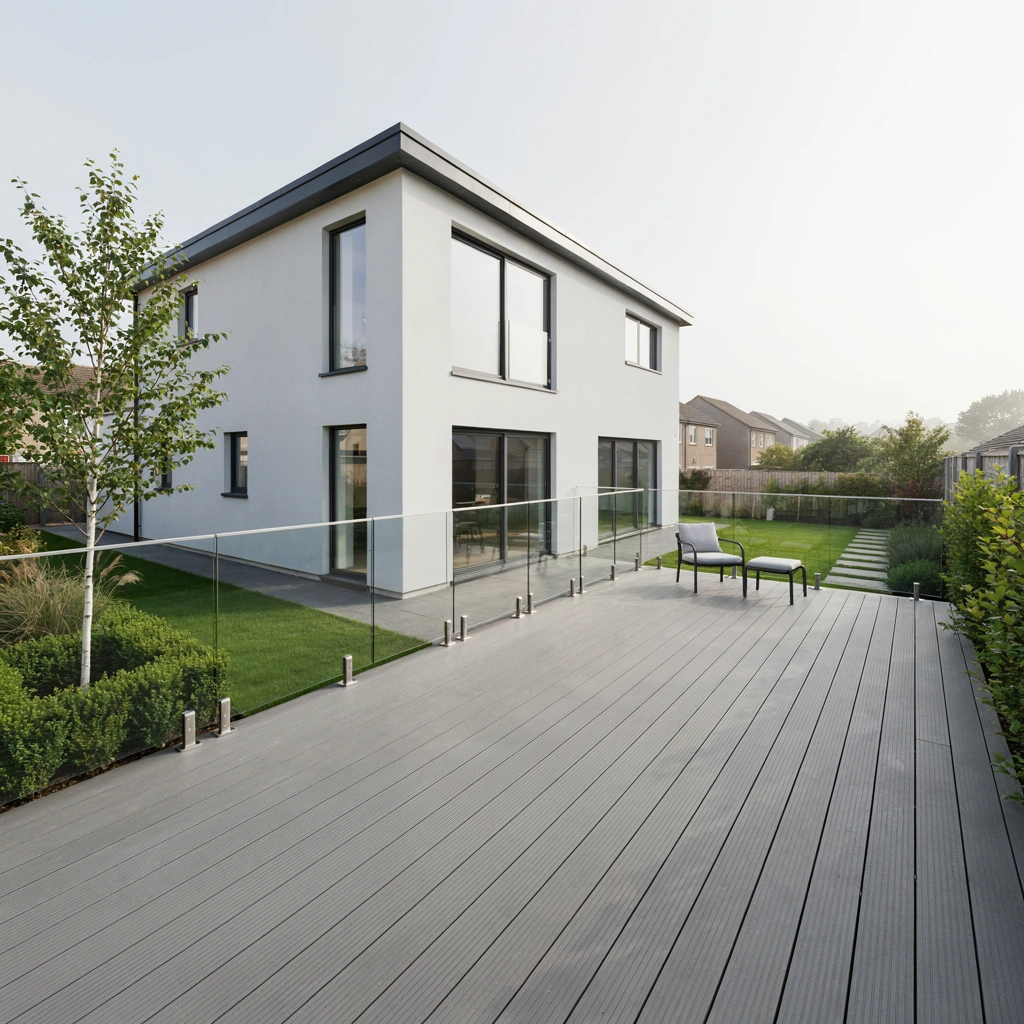
Both options can work very well on a standard terrace at home. If you want a classic look and a clearly defined texture, grooved composite decking board could be an appealing choice. If, on the other hand, you prefer a modern, understated effect, consider a smooth, brushed or natural wood-grain textured board. Before buying, it is a good idea to view a sample in natural daylight. Photos in an online shop may not accurately convey the product’s texture and colour.
Can you turn a composite decking board over?
Some models are double-sided and offer two different finishes – for example, finer grooves on one side and a different texture on the other. However, this does not mean that every composite decking board can be installed either way up. Check the manufacturer’s instructions before installation. If the product is designed to be installed with only one specified side facing up, turning it over may not comply with the system requirements.
Double-sided board in our gardpol.pl shop – DUO composite decking board.
The surface is not everything – the whole system matters.
When buying, it is easy to focus on the look of the board and forget about what will be underneath it. However, the durability of a composite decking terrace is greatly affected by:
- correct joist spacing,
- appropriate expansion gaps,
- a stable base,
- system fixing clips,
- ventilation beneath the terrace,
- proper support for the ends of the boards,
- effective water drainage.
Even the best board will not perform to its full potential if the structure is built in a way that does not comply with the manufacturer’s requirements.
How do you choose the right board before buying?
Do not choose based solely on the product photo. Ask for a sample and check it outdoors. See how the surface looks in the sun, in the shade and from different angles. Touch it, check its texture and compare several colours. It is also worth checking:
- the installation instructions,
- the technical data sheet,
- the warranty terms,
- the joists and fixing clips available,
- finishing trims,
- cleaning recommendations.
This way, you are choosing not just an attractive board, but a complete composite decking system.
FAQ – grooved or smooth composite decking board?
Is grooved decking always non-slip?
No. Grooving can affect the surface properties, but the grip of a specific product should be indicated by its technical specifications. If using it in a wet environment, it is worth checking the manufacturer’s data.
Which board is easier to clean?
A smooth or lightly textured surface may be quicker to sweep. Small particles of dirt are more likely to collect in deep grooves.
Is smooth composite decking slippery when it rains?
It may be more slippery, depending on the specific texture and product. Safety should not be judged solely by the description “smooth”. It is worth checking the manufacturer’s slip-resistance specifications.
Which board looks better with a modern home?
Brushed boards or those with a wood-grain texture are often chosen because they create a calm, uniform surface. However, this is primarily a matter of the building’s style and personal preference.
Does composite decking need treating?
Standard WPC boards do not require the kind of treatment and oiling used for many types of wood. However, they should be cleaned regularly in accordance with the manufacturer’s recommendations.
So which should you choose – grooved or smooth decking?
Grooved or smooth composite decking board? There is no single option that is best for every terrace. Grooved decking is a good choice for people who like the classic look of decking boards and a clearly defined, regular texture. Smooth, brushed or wood-embossed boards, on the other hand, can be an excellent fit for modern homes and minimalist gardens. If the terrace will be next to a swimming pool or somewhere frequently exposed to water, pay closer attention to the actual slip-resistance properties of the specific board, rather than just its appearance. Before making your final choice, it is therefore worth comparing samples, technical specifications and the entire installation system. A good composite decking board for a terrace should not only look great on the day it is installed, but also suit the way the terrace will be used over the years to come.
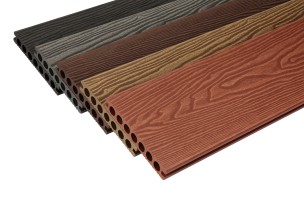
DUO composite decking board 23x148 - 5.8 m
Price per 1 linear metre of board: 21,30 zł
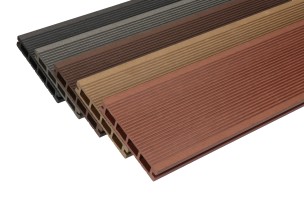
SELECT composite decking board 25x140 - 5.8 m
Price per 1 linear metre of board: 17,27 zł
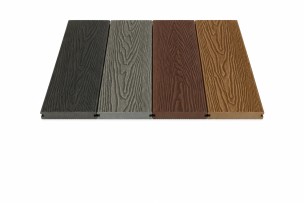
Full Premium composite decking board 20x140 - 3.5 m
Price per 1 linear metre of board 26,75 zł
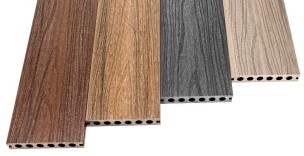
PREMIUM composite decking board 23x138 - 5.8 m
Price per 1 linear metre of board: 24,85 zł