
What materials are needed to build a composite decking terrace? A practical guide.
Planning to build a composite decking terrace? Find out what materials you’ll need and how to plan the construction process properly. Practical step-by-step advice!
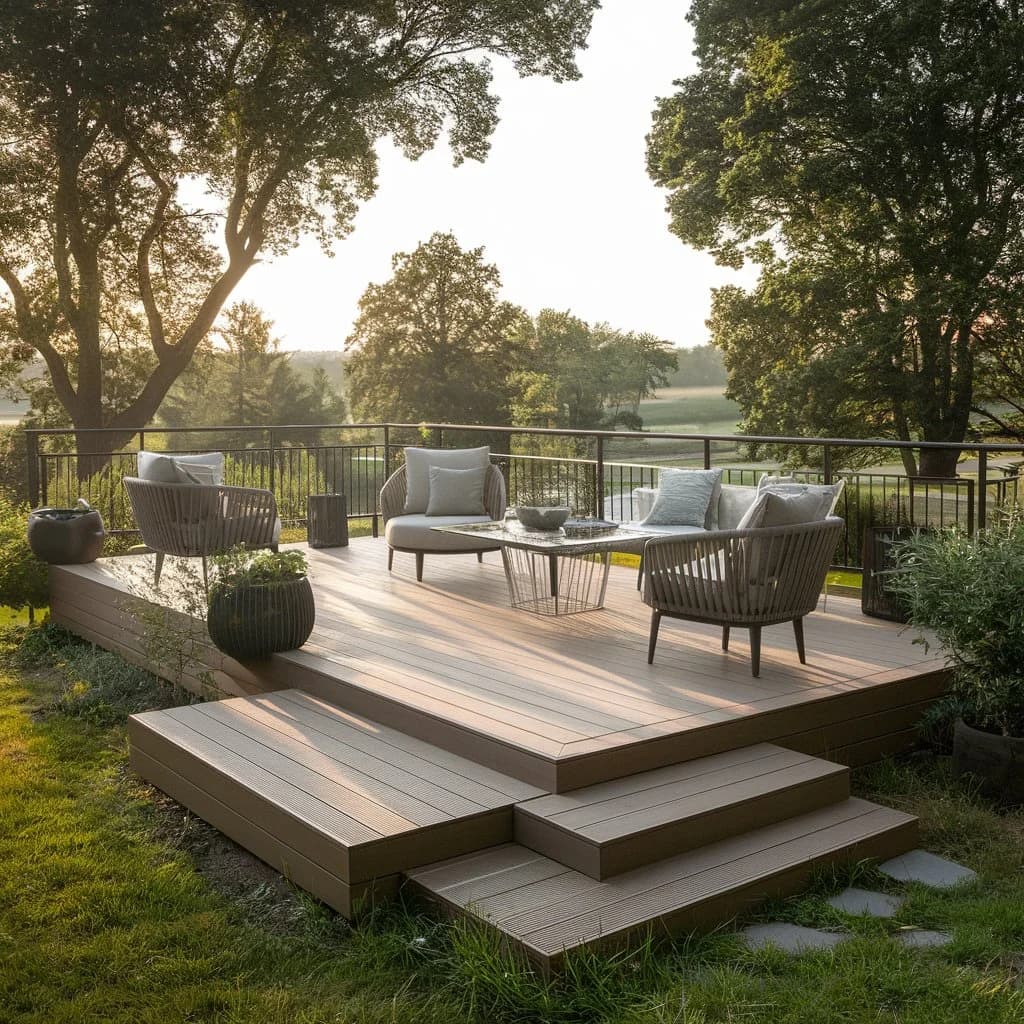
Building a terrace with composite decking boards is the ideal solution for anyone looking for durability, attractive appearance and easy maintenance. It is a great way to create a relaxing space that will serve you for years without the need for time-consuming maintenance. However, to ensure the terrace fulfils its purpose and is sturdy, it is essential to prepare the materials properly and follow proven installation principles. In this article, we will discuss what materials you will need to build a terrace with composite decking boards, what to consider when choosing them, and how to carry out the build step by step.
Why choose composite decking boards?
Composite decking boards are becoming increasingly popular, and their advantages are hard to overstate. Above all, they combine the best qualities of wood and plastic. As a result, they are not only durable, but also attractive and functional. Unlike traditional wood, composite decking boards do not require regular painting or impregnation, which significantly reduces their maintenance costs in the long term.
Their resistance to changing weather conditions is another major advantage. Composite decking boards do not absorb water, swell or warp when exposed to moisture, which is particularly important in a climate where rain, snow and significant temperature fluctuations are common. They are also resistant to mould, fungi and pests, making them an ideal choice for anyone looking for a durable, low-maintenance material for a terrace.
It is also worth highlighting the environmental aspect. Composite decking boards are often made from recycled materials, such as sawdust and plastic, helping to reduce their negative impact on the environment. Finally, their appearance is also appealing – the variety of colours and textures makes it possible to match them to any garden style or house architecture.
Common mistakes when building a terrace.
-
Inadequate ground preparation
Uneven or unstable ground can cause the structure to deform. -
Joists spaced too far apart
This can cause the decking boards to sag under the weight of people using the terrace. -
Not using rubber pads
Without pads, the structure is exposed to moisture, which shortens its lifespan. -
Omitting gaps between the decking boards
Without gaps, ventilation and water drainage are impeded.
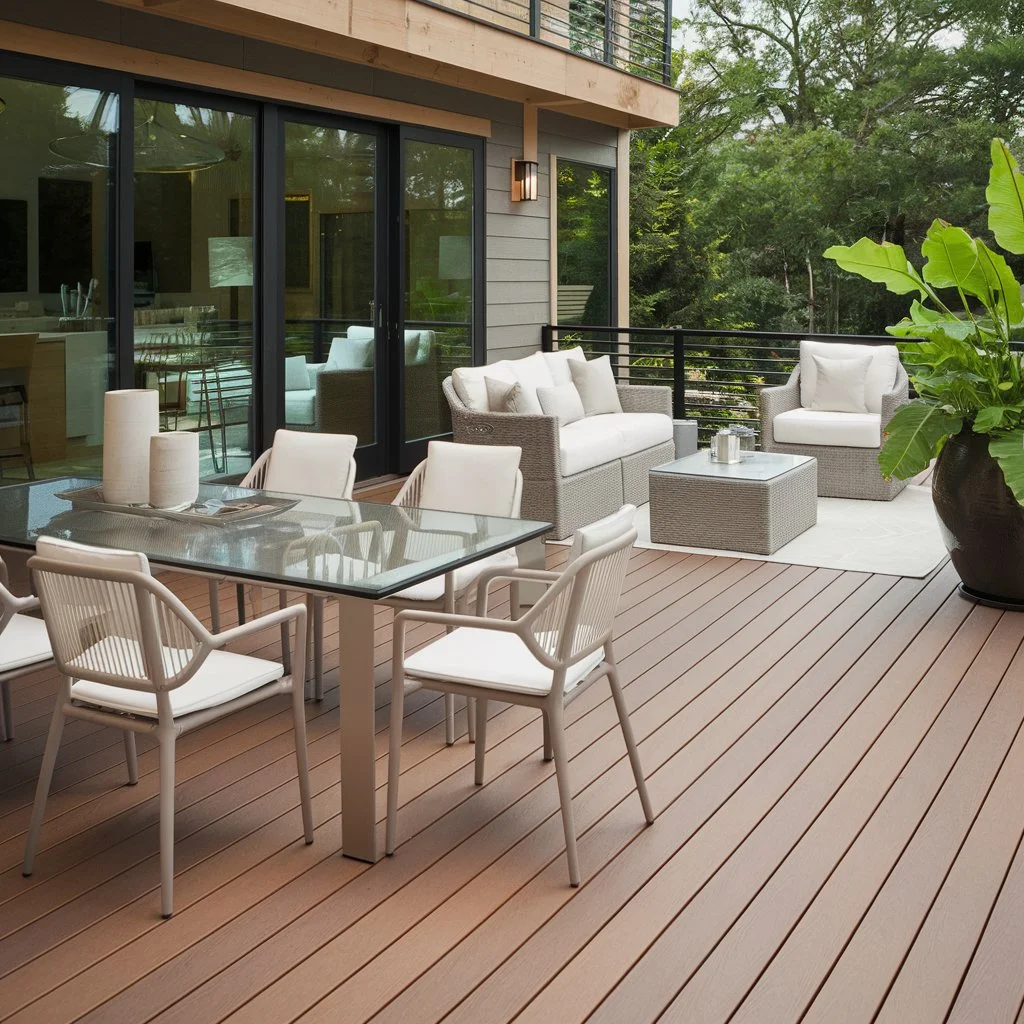
List of materials needed to build a terrace with composite decking boards.
To build a durable and attractive terrace, simply buying composite decking boards is not enough. You will also need a range of other materials which, together, will create a stable and sturdy structure.
1. Composite decking boards.
Composite decking boards are the foundation of the entire structure. When choosing them, it is worth considering a few key factors. The first is the quality of the material – higher-grade boards will be more resistant to mechanical damage and retain their appearance for many years. The thickness of the boards is also important – thinner models may be cheaper, but they will not offer the same durability and stability as thicker ones. The colour and texture of the boards are a matter of personal preference, but it is worth remembering that lighter-coloured boards heat up less in the sun, which can be important if you plan to use the terrace on hot days. It is also worth considering the installation method – some boards have special clip systems that make installation easier and provide an attractive finish without visible screws.
2. Composite or aluminium joists.
Joists are the load-bearing components that form the framework of the entire terrace. The decking boards will rest on them, so their quality and stability are essential to the durability of the structure. Composite joists are resistant to moisture and corrosion, making them an ideal choice for building an outdoor terrace. Alternatively, you can use aluminium joists, which are even stronger but usually more expensive. When installing joists, it is very important to maintain the correct spacing between them – usually between 30 and 40 cm, depending on the thickness of the decking boards. Spacing them too far apart can cause the boards to sag under the weight of people using the terrace, negatively affecting its comfort and durability.
3. Installation accessories.
Building a terrace is not possible without the right installation accessories. The most important ones include:
- Fixing clips – used to attach decking boards to joists. Choose clips made of stainless steel or durable plastic that will not corrode.
- Stainless steel screws – for fastening clips and other structural components.
- Wall plugs – essential if you are installing the structure on a concrete surface.
4. Rubber pads.
Rubber pads serve an important purpose – they cushion the structure, protect it from moisture and help to level out minor unevenness in the ground. This means the joists are not in direct contact with damp ground, significantly extending their service life.
5. Damp-proof membrane (optional).
If you are building a terrace on the ground, using a damp-proof membrane will protect the entire structure from moisture penetration. This is particularly important on ground with a high moisture content, where water can collect beneath the terrace.
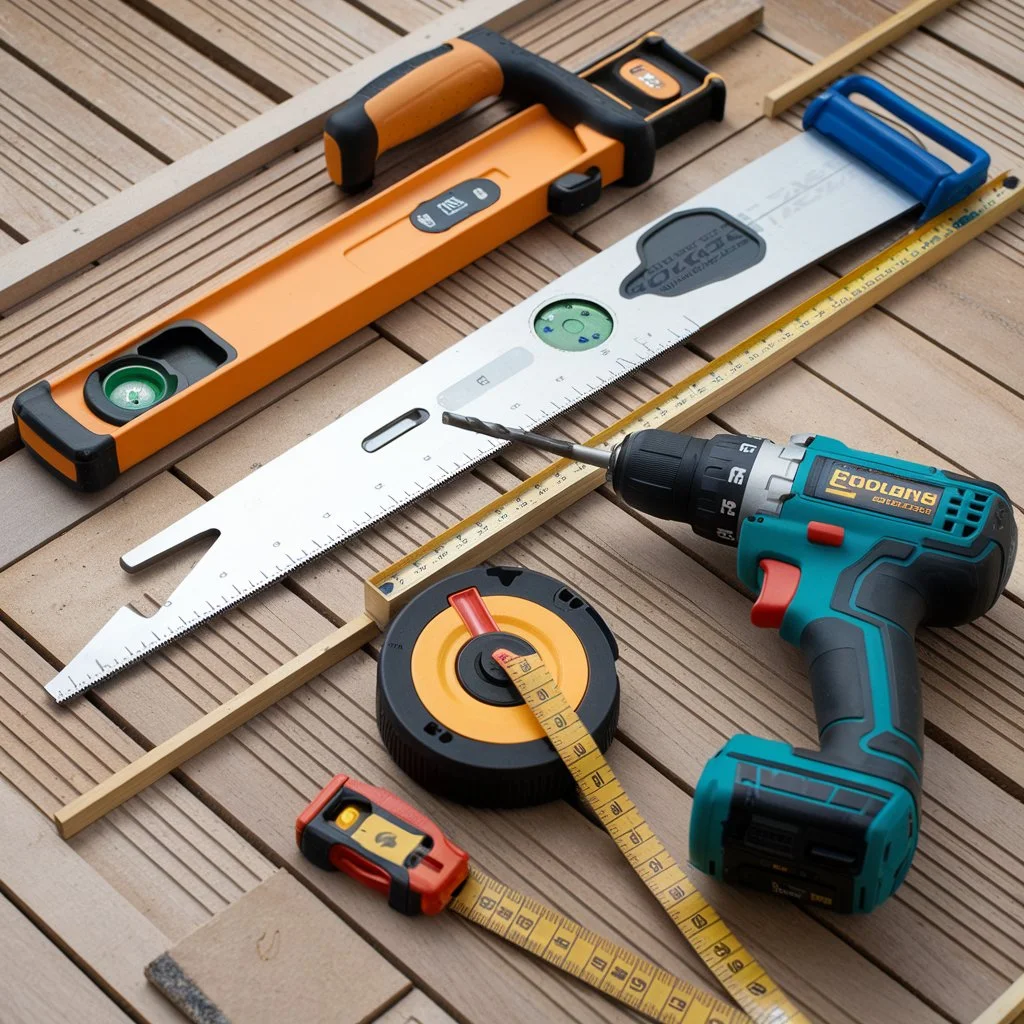
6. Tools.
Building a terrace also requires the right tools. These include:
- Drill driver,
- Saw for cutting decking boards,
- Spirit level,
- Tape measure and pencil.
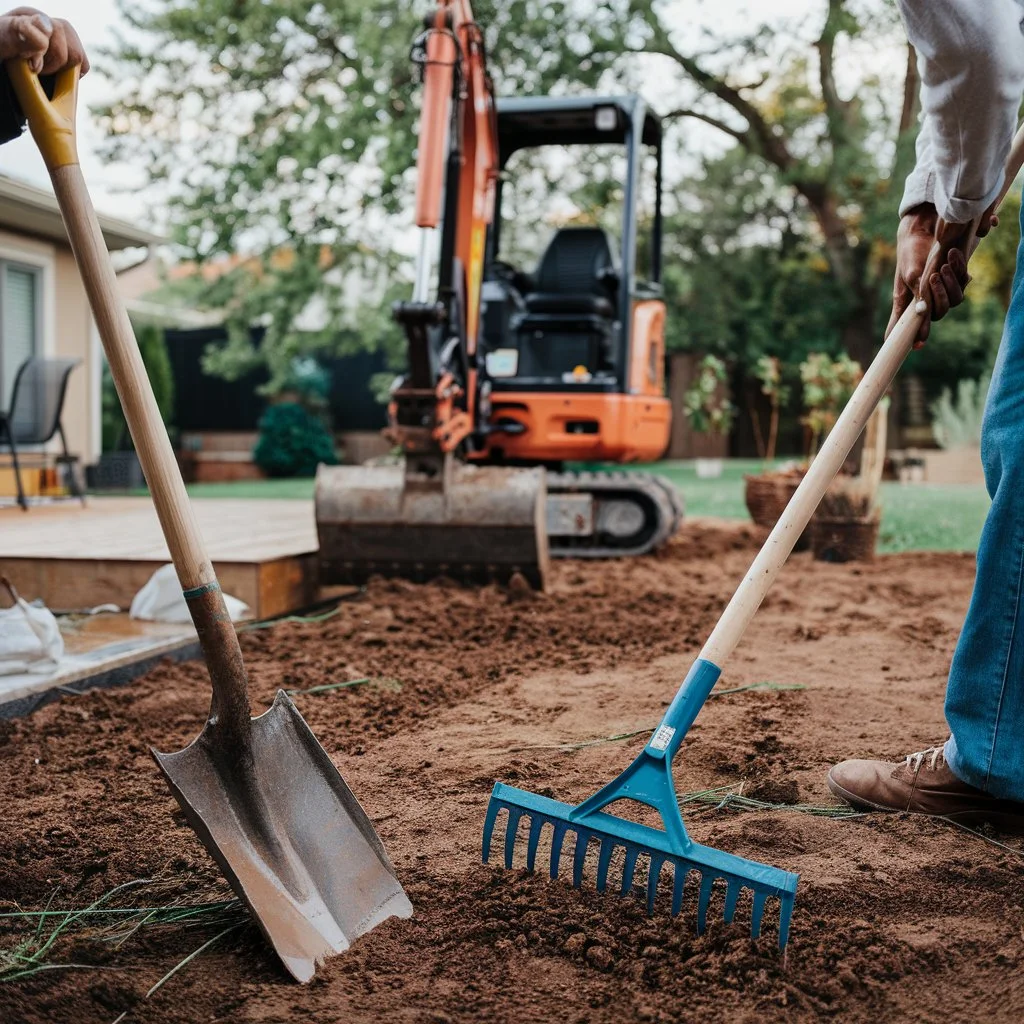
Step by step: How to build a terrace with composite decking boards?
The first step is to prepare the ground. It should be level and stable. If you are building a terrace on the ground, it is recommended to use a layer of aggregate or concrete foundation blocks. This will make the structure stable and prevent moisture from penetrating the joists.
The joists should be laid parallel to one another, at the spacing recommended by the decking board manufacturer. It is also important to use rubber pads beneath each joist to prevent it from coming into contact with the damp ground. Screw the joists to the concrete foundation or blocks using expansion plugs.
3. Installing the composite decking boards.
Composite decking boards must be fixed using fixing clips. These clips ensure the correct gaps between the boards, which are essential for ventilation and water drainage. Remember to screw each board securely into place and make sure there is no movement.
4. Finishing the terrace.
Finally, install finishing strips to cover the visible edges of the structure. This will give your terrace a neat and elegant appearance.
Summary.
Building a terrace with composite decking boards requires careful planning and high-quality materials. With the right preparation and proven solutions, you can create a space that is not only attractive but also functional and durable for many years. Remember details such as rubber pads, ventilation gaps and sturdy joists – these are what determine the success of the project.

COMPO-CLEAN cleaner for composite terraces - 1L
For composite decking boards
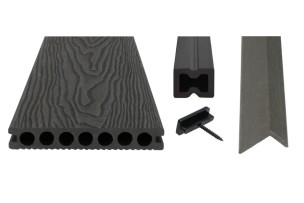
DUO composite system for a 50m2 terrace - GRAPHITE
DUO composite system designed for a terrace measuring 5m x 10m
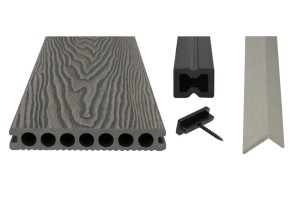
DUO composite system for a 50m2 terrace - Light grey
DUO composite system designed for a terrace measuring 5m x 10m
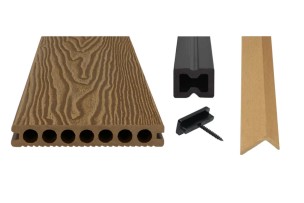
DUO composite system for a 50m2 terrace - Honey
DUO composite system designed for a terrace measuring 5m x 10m



