Composite system: Which joists are best to choose?
Wondering which joists to choose for a composite system? Discover the different types of joists, along with their advantages and disadvantages. Find out which type of joist will work best for your project.
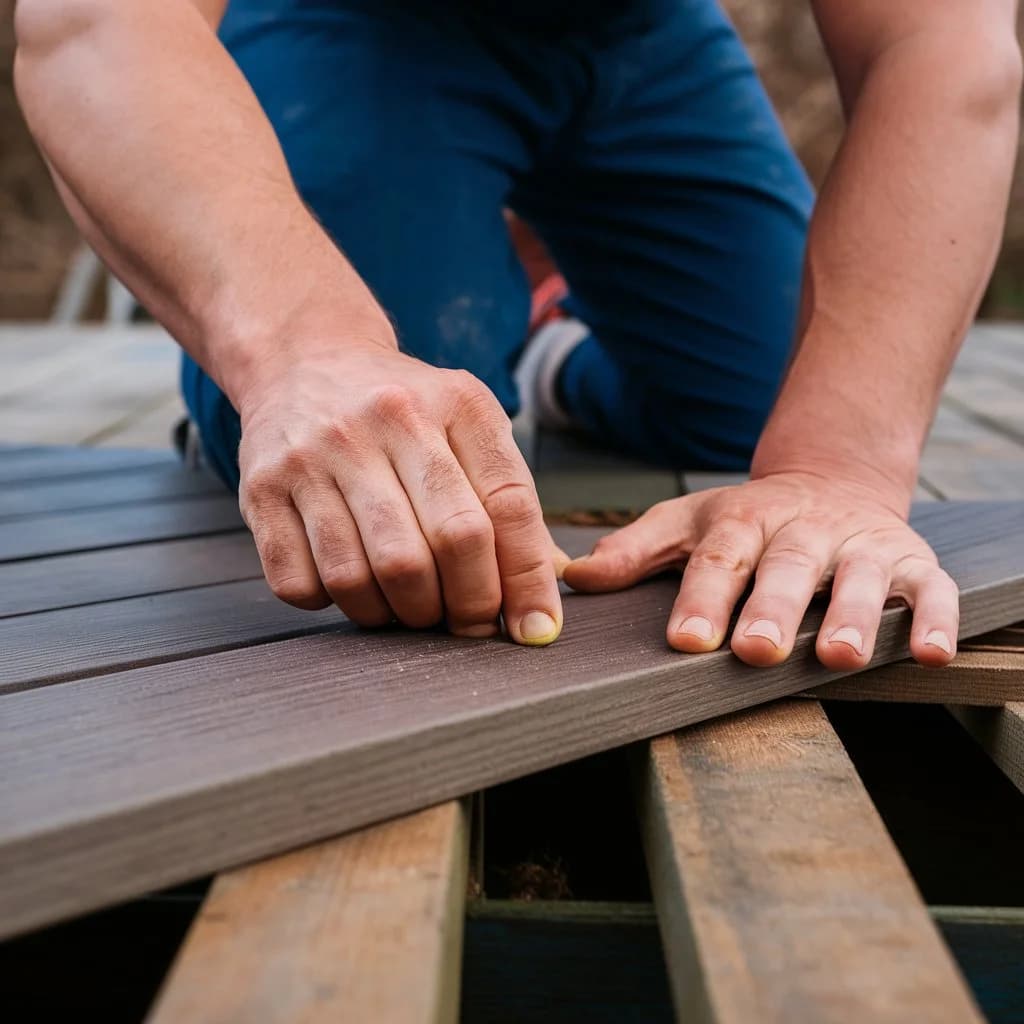
When planning to build a terrace, a pier or another structure using composite decking boards, among the most important elements to consider are the joists. They provide stability and durability to the entire structure, and choosing the right ones is key to the success of your project. In this article, we’ll look at the different types of joists, discuss their advantages and disadvantages, and suggest which ones are best suited to different conditions.
What are joists?
Joists are horizontal structural elements that serve as the base for composite decking boards. They provide appropriate support and distribute weight evenly across the ground. Depending on the material they are made from, joists can have different properties, such as resistance to moisture, durability and ease of installation.
Which joists should you choose?
Choosing the right joists depends on several factors, such as your budget, environmental conditions and personal aesthetic preferences. Here are some tips that may help you decide:
- Environmental conditions.
If your project is in a place exposed to moisture, such as near a swimming pool, pond or sea, composite or metal joists are the best choice because of their resistance to water and mould.
- Budget.
If you have a limited budget and the project is not exposed to extreme weather conditions, wooden joists may be sufficient. However, remember that they need regular maintenance, which involves additional costs in the future.
- Aesthetics.
If you want a natural look for the structure, wooden joists may be the best choice, although they require more work and maintenance. Alternatively, composite joists can also blend well with their surroundings while offering greater durability.
- Durability and strength.
If maximum durability and strength are important to you, for example for structures exposed to heavy loads or intensive use, metal joists are the best solution. Aluminium joists are resistant to corrosion and require no maintenance, making them an ideal choice for professional applications.

Types of joists.
Wooden joists.
Advantages:
- A natural appearance that blends perfectly with the surroundings.
- Easy to work with – they can be cut and shaped to suit the needs of the project.
- Relatively low price compared with other materials.
Disadvantages:
- They require regular maintenance, such as impregnation, to prevent rot and insect damage.
- They may warp or crack due to moisture and temperature changes.
- Shorter lifespan compared with other materials.
Composite joists.
Advantages:
- Resistance to moisture, mould and insects.
- They do not require regular maintenance, resulting in lower upkeep costs.
- Durability – they are more resistant to weather conditions than wood.
Disadvantages:
- Higher initial cost compared with wooden joists.
- Less flexible to work with – more difficult to cut and shape.
- They may be less attractive in natural surroundings.
Metal joists (aluminium and steel).
Advantages:
- Exceptional durability and strength – ideal for structures exposed to heavy loads.
- Resistance to corrosion (especially aluminium joists).
- Low maintenance requirements.
Disadvantages:
- The highest cost of all types of joists.
- They require specialist tools and skills to install.
- They can heat up in the sun, affecting comfort when in use.
Installing joists – what should you know?
Choosing the right joists is only part of the job. Their correct installation is just as important. Here are some tips that may help with the process:
- Correct spacing: Joists should be positioned at suitable intervals, usually every 30-40 cm, to provide even support for the composite decking boards.
- Preparing the ground: Make sure the ground is level and stable. For soft ground, it is worth using concrete footings or special anchors.
- Fixing: Joists should be securely attached to the ground to prevent them from moving. Special bolts and screws can be used for wooden and composite joists, while metal joists often require welding or special connectors.
- Insulation: To prevent wooden joists from rotting, it is worth using an insulating layer, such as protective film, between the joist and the ground.
Summary.
Choosing the right joists for a composite system is essential for the durability and stability of the entire structure. Wooden, composite and metal joists each have their own advantages and disadvantages, and your choice should depend on the specific project, environmental conditions and available budget. Also remember to ensure correct installation, which will provide longevity and safety for your structure. Whether you are planning to build a new patio, pier or another structure using composite decking boards, the right joists are the foundation on which you can build your dream of a beautiful and durable outdoor space.