
How to avoid waste when building a composite decking terrace: a practical guide.
How can you reduce waste when building a deck with composite decking boards? Find out how to plan the dimensions, WPC decking board lengths, joists and deck layout so you can buy the right amount of material and reduce the number of cuts.

Building a terrace is about more than just choosing the colour and texture of the boards. Before installing composite decking boards, it is worth carefully planning the area, the laying direction and the lengths of the individual components. A few well-considered decisions can mean that, instead of a pile of short offcuts, only a small amount of material is left over when the work is finished. This matters above all for costs. Composite decking boards bought without careful planning can generate a lot of unnecessary offcuts. On the other hand, trying to order material to an exact centimetre is not the best solution either. During installation, a reasonable allowance is needed for cutting, selecting components and unforeseen circumstances. How do you find the right balance? The key is to optimise before placing the order.
Why is waste generated when installing composite decking boards?
The most common reason is that the lengths of the available boards do not match the dimensions of the terrace. Suppose we have an area with an unusual shape, steps, a recess by the façade and several corners. If we start cutting all the components without a plan, it will quickly become clear that many short pieces are left over and cannot be used in the next rows. Waste can also be caused by:
- choosing the wrong direction for laying the boards,
- not measuring the terrace accurately,
- not allowing for expansion gaps,
- poorly planned joint positions,
- incorrect cuts,
- cutting in the wrong order,
- not having a plan for using the leftover pieces.
Importantly, the amount of waste does not depend solely on the area of the terrace. Two terraces of 30 m² may require different amounts of material because their geometry is completely different.
Accurate terrace measurements are essential.
The first step should be to measure the project site accurately. It is not enough to know that the terrace is, for example, 5 × 6 metres. In practice, it is worth measuring every edge, as the walls of a building are not always perfectly parallel, and an existing concrete slab may have slight dimensional differences. You should also mark:
- posts,
- steps,
- recesses,
- protruding façade features,
- gutters,
- patio doors,
- unusual corners.
Only a plan like this makes it possible to calculate accurately how many composite decking boards for the terrace will actually be needed.
Match the length of the composite decking boards to the dimensions of the terrace.
This is one of the most effective ways to reduce waste. If the chosen composite decking board is available in several lengths, it is not worth automatically ordering the longest option. Sometimes a shorter board will allow you to use the material much more efficiently. For example, if two required lengths can be cut from a single component, the offcut may be minimal. With a different size, each board might leave a piece that cannot be used. That is why it is worth preparing a composite decking board cutting plan before buying. It is a bit like putting together a jigsaw puzzle – before picking up the saw, we work out where each component can be put to best use.
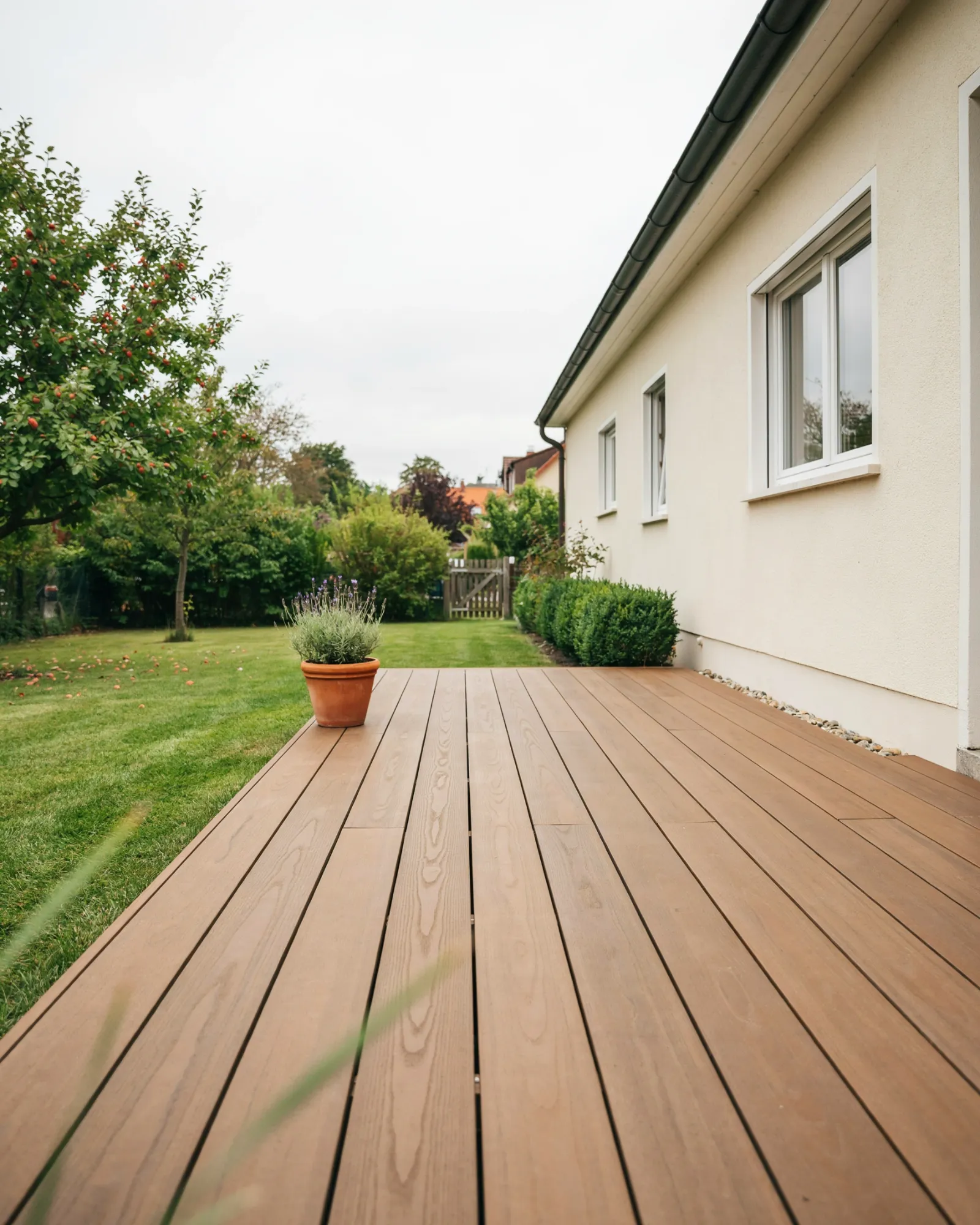
Laying direction of the boards can reduce the amount of waste.
We often choose the installation direction solely for visual reasons. However, it can have a major impact on material usage. If the terrace is, for example, 4 × 7 metres, the amount used will differ depending on whether the boards run along the shorter or longer side. Before making a decision, it is therefore worth calculating at least two options. Of course, the laying direction also affects the structure, because the joists must be positioned appropriately in relation to the boards. You should therefore not change the direction just to save a few metres of material if this would compromise the structure or appearance. The best design combines three elements: aesthetics, correct installation and optimal use of WPC decking boards.
Not every offcut of composite decking board is waste.
This is a very important rule. If a piece 80 or 100 cm long remains after the first cut, do not throw it away straight away. It may come in handy for steps, a recess, a shorter row or another section of the terrace. It is therefore worth setting aside a place during the work where all useful offcuts can be kept. It is also good practice to label them with their lengths. The installer then does not have to measure each piece every time a shorter component is needed. On a larger composite terrace, this simple solution can reduce the use of several more full-length boards.
Plan the board joints before installation begins.
If the terrace is longer than a single board, joints may be necessary. They should not be positioned at random. Their placement should be considered both visually and structurally. The ends of the boards must have suitable support and expansion gaps in accordance with the instructions for the specific system. Additional or doubled joists are often used at joints so that each board end has proper support and fixing. Well-planned joints also make it possible to use shorter pieces of composite decking board that would otherwise become waste.
Do not forget about board width and gaps.
When calculating the number of rows, do not multiply the terrace area solely by the product’s nominal dimensions. There are gaps between the boards as part of the installation system. Their width may be determined, among other things, by the fixing clips used. Before ordering, it is therefore worth checking the covering width of the composite decking board, that is, the actual width taken up by each subsequent row when correctly installed. This helps avoid a situation where a very narrow strip remains at the final edge, requiring an unattractive lengthwise cut to the boards.
Plan the structure together with the boards.
Optimisation does not apply only to the WPC surface. joists for composite decking boards should also be planned in advance. The required spacing, board joints, edges, steps and additional supports must all be taken into account. If we build a random structure first and only then start thinking about the board layout, the opportunities to use offcuts may be very limited. The structural design and the board layout should therefore be developed in parallel.
Is it worth ordering a composite decking board with no extra allowance?
Probably not. Reducing waste does not mean ordering exactly the mathematically calculated amount of material. In practice, construction requires allowance for cuts, unusual sections, potential errors and the nature of the specific project. However, the size of the allowance should not be chosen at random. A simple rectangular terrace may generate far fewer offcuts than a structure with many corners, steps and angles. So instead of using the same percentage for every project, it is best to calculate the requirements based on the actual design and cutting plan.
Plan first, then pick up the saw.
Cutting mistakes are one of the most avoidable sources of waste. Before each cut, it is worth following a simple rule: measure twice, cut once. The first and last boards, corners, steps and areas next to the building façade require particular care. You must also remember the expansion gaps required by the manufacturer. A board cut exactly to the space’s dimensions without allowing for expansion may prove unusable.
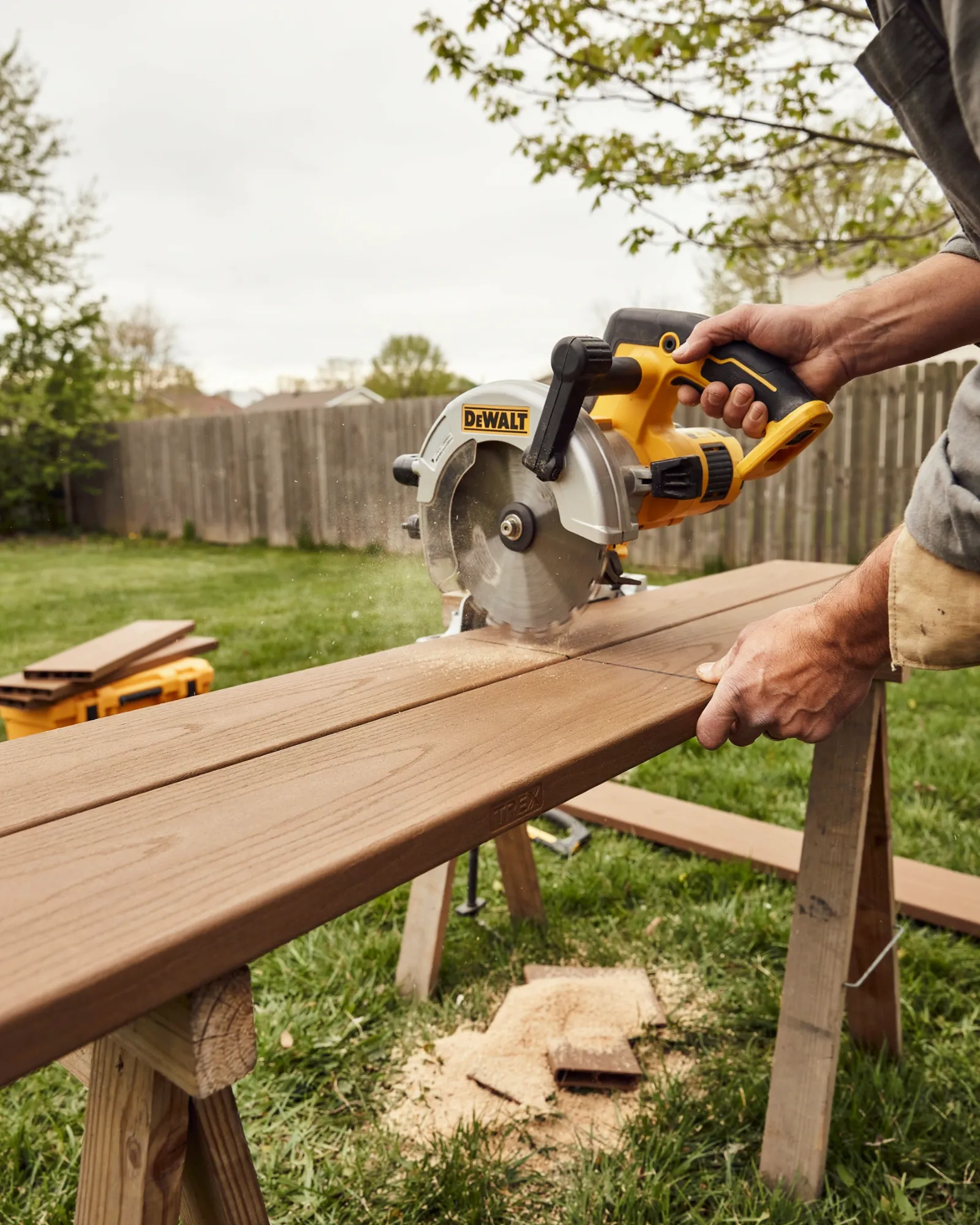

What should you do with leftovers after building a terrace?
Even with very good optimisation, a few offcuts may remain. It is not worth disposing of all of them straight away. It is a good idea to keep one or two longer offcuts for the future. They may come in handy if an individual component is mechanically damaged after a few years. Depending on the system and design, the remaining pieces can be used for small finishing elements or other applications, provided their use is consistent with the product’s properties. For information about disposal or recycling options, it is best to check the manufacturer’s information and local waste management rules, as WPC composite should not automatically be treated in the same way as pure wood.
The most common mistakes that increase waste.
Most material is usually wasted not because the terrace is complicated, but because there was no advance planning. Common mistakes include:
- buying boards before taking accurate measurements,
- no cutting plan,
- not using leftover lengths,
- randomly positioning joints,
- ill-considered laying direction,
- incorrect cutting,
- omitting expansion gaps,
- ordering a large surplus ‘just in case’.
A well-prepared design helps to prevent most of these problems.
How do you calculate composite decking boards for a terrace?
First, prepare an accurate plan of the terrace and decide which direction the decking boards will run. Then check the lengths available for the WPC model you have chosen and its cover width. The next step is to map out the rows and cutting points. For each cut-off piece, it is worth checking straight away whether the remainder will fit elsewhere in the design. For more complex projects, you can create a simple table:
full board → first section → offcut → where to use the offcut.
Only after carrying out this optimisation should you determine the final number of decking boards and the necessary allowance.
Does a cheaper decking board always mean a cheaper terrace?
Not necessarily. This is particularly important when comparing offers. One model may have a lower unit price, but the available board lengths may not suit the dimensions of a particular terrace very well. Another product may cost more per board but allow the material to be used much more efficiently. That is why, when buying, it is worth comparing the cost of the complete terrace, rather than just the price of one metre of decking board.
FAQ – waste when building a composite decking terrace.
How much extra composite decking should I buy?
There is no single figure that is right for every terrace. The amount of extra material needed depends on the shape of the area, the laying direction, the available board lengths, the number of joints and the number of unusual cuts.
Can short pieces of WPC decking board be used?
Yes, provided their length and support allow them to be installed in accordance with the manufacturer's instructions. Shorter pieces may be useful, for example, for certain details, steps or unusual sections of the terrace.
Does the laying direction of decking boards affect the amount of waste?
Yes. Changing the direction can significantly affect the number of cuts and how well the available lengths are used. However, you also need to take the joist structure and the appearance of the terrace into account.
Is it worth keeping a piece of decking board after installation?
Yes. A longer offcut or a spare full board from the same batch may come in handy in the future if the surface is mechanically damaged.
Can WPC waste be disposed of with wood?
You should not assume so. WPC decking boards are made from a composite material. Disposal of offcuts should be determined in accordance with local waste collection rules and the manufacturer's information.
Less waste means a better-planned terrace.
Reducing waste when building a composite decking terrace starts before you buy the first decking board. Accurate measurements, the right laying direction, matching product lengths and preparing a cutting plan all help you use the material much more efficiently. However, the aim is not to use every centimetre at all costs. The manufacturer's structural requirements, adequate support, expansion gaps and correct installation of composite decking boards remain the most important considerations. A well-designed composite terrace combines good looks with economy. Fewer unnecessary cuts mean lower material costs, less work dealing with waste and a more carefully planned project. So before ordering composite decking boards, it is worth calculating more than just the terrace area. Check the available lengths, draw out the board layout and consider where offcuts can be used. Spending a few dozen minutes on optimisation before installation can lead to noticeable savings across the whole project.
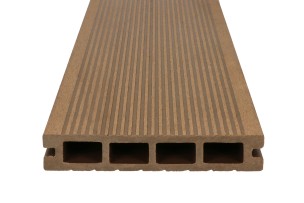
SELECT composite decking board 25x140 - 4,0 m
Price per 1 linear metre of decking board: 17,27 zł
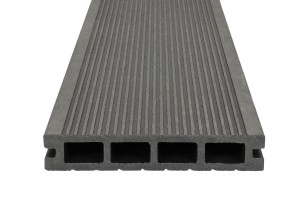
SELECT composite decking board 25x140 - 2,9 m
Price per 1 linear metre of decking board: 17,27 zł
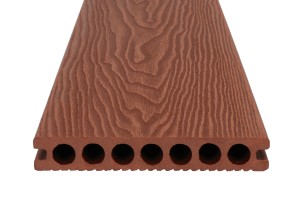
DUO composite decking board 23x148 - 2,25 m
Price per 1 linear metre of board: 21,30 zł
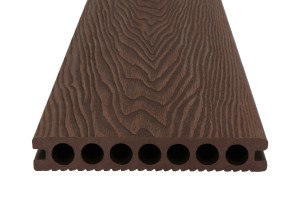
DUO composite decking board 23x148 - 3,5 m
Price per 1 linear metre of board: 21,30 zł



